

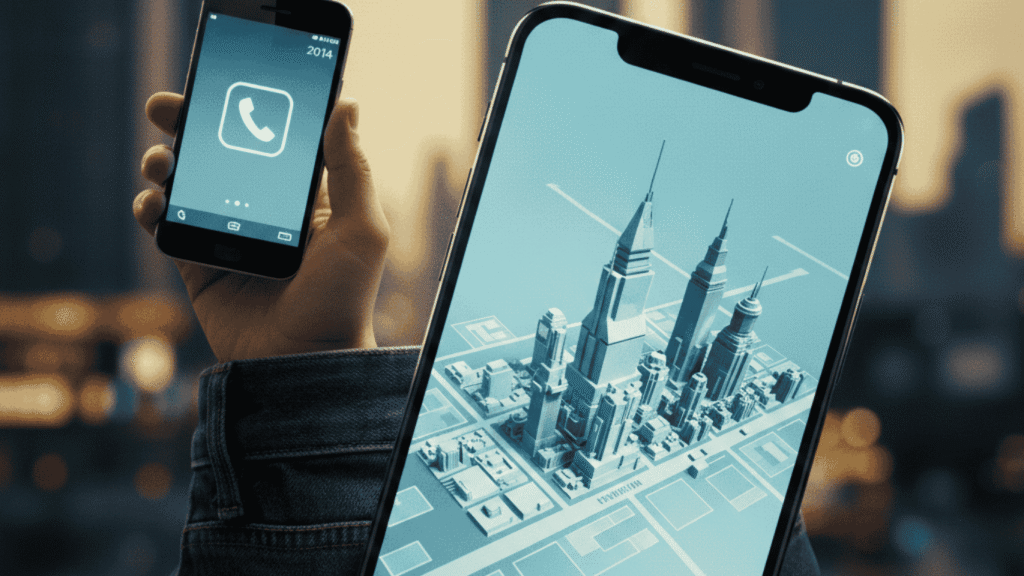
Industry giants prepare to cross the seven-inch threshold as the era of the handheld phone faces an architectural extinction.
Are you ready to trade your pocket for a holster? The boundary between the mobile device and the professional workstation is about to vanish forever. For years, consumers whispered for a return to ergonomics, yet the industry has chosen a different path entirely.
Recent leaks from the heart of the global supply chain suggest that the tech world is preparing to shatter a psychological ceiling. We are no longer looking at “large” phones. We are witnessing the birth of the “pocket-tablet” hybrid.
The Seven Inch Revolution
Engineers are currently finalizing panels that measure at or above seven inches diagonally. To put that in perspective, early versions of the iPad Mini and the Kindle Fire occupied this exact space. Technology that once defined the tablet market now sits on the drawing boards of smartphone manufacturers. While thin bezels allow these screens to fit into slightly smaller frames, the physical footprint remains undeniable.
Also Read: Google’s New Preferred Sources Feature Will Completely Change How You Read the News
Manufacturers argue that consumers demand more canvas for high-resolution gaming and cinematic streaming. However, this shift creates a paradox for the average user. While visual immersion reaches an all-time high, the basic utility of a one-handed device is slipping through our fingers. The data confirms this trend. Reports indicate that the global market share for smartphones with screens smaller than six inches has plummeted to less than 10% of total sales. Even more startling, the average display size has swelled from roughly 5 inches in 2014 to over 6.3 inches in 2024.
Power vs. Portability
Why can’t we have small, powerful phones? The answer lies in the heat. As processors become more sophisticated, they generate immense thermal energy. A larger chassis acts as a heat sink, allowing the device to maintain peak performance without melting its internal components. Furthermore, the massive power draw of a 7-inch 120Hz display requires a battery that a compact frame simply cannot house.
Market research highlights a growing divide in user satisfaction. Approximately 15% of smartphone users globally express a preference for “mini” versions of flagship devices, yet these models consistently fail to meet sales targets. This lack of commercial success gives companies the green light to pursue “Mega” and “Ultra” formats. We are witnessing an arms race where the weapon of choice is the OLED panel.
The Psychological Impact of the Screen
The move toward seven inches isn’t just about hardware. It changes how we interact with the world. A larger screen invites longer sessions and deeper immersion, which directly benefits app developers and advertisers. Statistics from mobile usage trackers show that users on devices with screens larger than 6.5 inches consume 25% more video content than those on smaller devices.
Also Read: Samsung Unfolds the Future in Fight for Folding Phone Crown
By pushing the screen size to seven inches, manufacturers are essentially forcing a lifestyle change. The convenience of a quick text message is being replaced by the demand for a full-scale digital experience. As we look toward the next product cycle, the “small phone” is no longer a product. It is a memory.
