
Skills-Based Hiring Is Growing. But Removing Degree Requirements Is the Easy Part
“`html REMOTE HIRING INTELLIGENCE An employer can delete “bachelor’s degree required” from a vacancy and still run the same credential-driven
“`html REMOTE HIRING INTELLIGENCE An employer can delete “bachelor’s degree required” from a vacancy and still run the same credential-driven

REMOTE HIRING INTELLIGENCE · OCTOBER 2026 Imagine a candidate seeing “Remote,” spending twenty minutes applying, and then learning the employer
WORKINVIRTUAL • REMOTE HIRING A persuasive résumé can earn a candidate an interview. It cannot tell you, on its own,
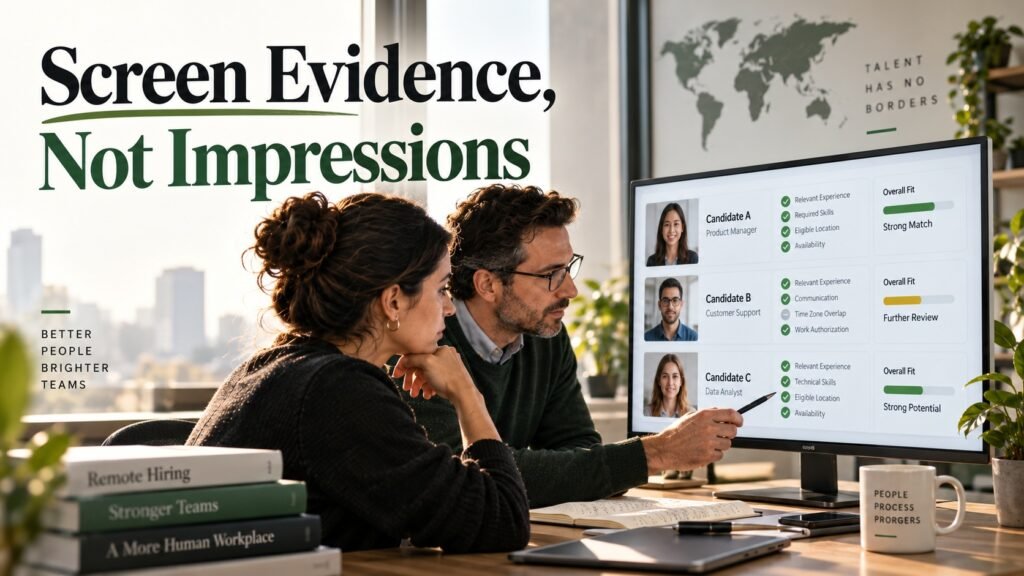
To screen remote candidates consistently, separate four questions that hiring teams often mix together: Is the person eligible for this
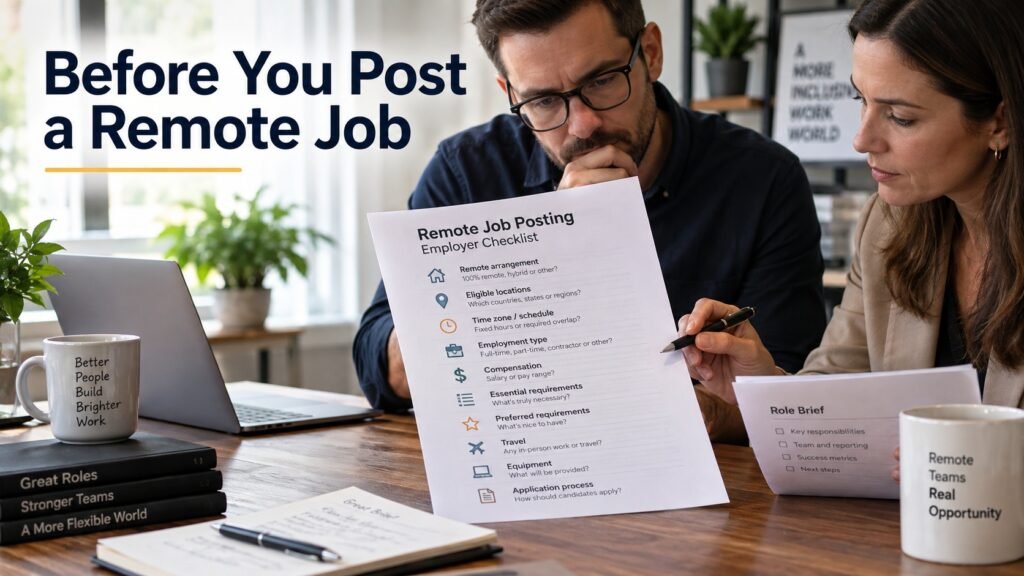
A useful remote job posting should tell candidates not only what the job involves, but whether they can actually be
Artificial intelligence is changing how companies recruit, evaluate, and hire new talent. Recent workforce reports suggest that some entry-level technology
New workforce data shows that employment among recent graduates reached 83% in 2025. While the report focuses on graduate employment
Understand the gap between job openings and successful hires, test your fit, prepare credible evidence and verify current opportunities through authoritative sources.
Decide whether a team needs better priorities, processes, skills, technology, outsourcing or a carefully defined new hire.
See what 2026 remote-work data means for job availability, hybrid rules, hiring geography and distributed-team operations—and what to verify.
A current, practical guide to Skills-First Remote Hiring, including verification, preparation and safer next steps.
Separate AI exposure estimates from observed job losses, identify task-level change and build an evidence-led skills response.