

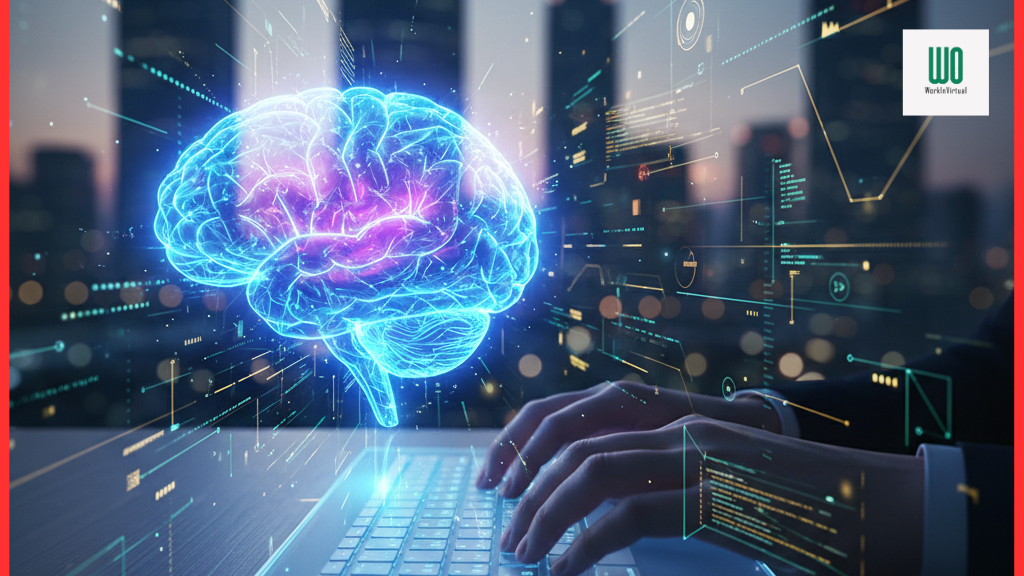
The Silent Revolution
A quiet revolution is sweeping through the technology industry. It is a seismic shift not driven by a new gadget or social media platform but by something far more fundamental. Artificial intelligence is no longer a futuristic concept but an indispensable tool in the daily work of a vast majority of tech professionals.
The Surprising Numbers
A new study from Google’s DORA research group reveals a startling truth. Based on feedback from thousands of technology experts worldwide, a staggering 90% of them now use AI in their work. Consider it a dramatic jump from the previous year, signaling a rapid and widespread integration of AI into the core of tech development.
This widespread adoption indicates how quickly the industry has embraced AI for tasks, such as writing and refining code. It also highlights a turning point. AI is moving from being a fringe technology to a central pillar of professional life.
Is AI a Job Killer or a Partner?
The rise of AI has fueled intense debate. Some industry leaders have voiced concerns about its potential impact on employment, especially for entry-level workers. Data from sources such as the New York Federal Reserve suggest that recent computer science graduates face a tougher job market than in previous years. The number of software engineering job postings has also seen a significant decline.
However, many in the industry, including experts at Google, believe AI will not replace human creativity. They see it as a powerful partner designed to automate the repetitive and mundane aspects of work. The goal is to free up developers to focus on complex problem-solving and innovation.
The Trust Factor
While the adoption rate is high, trust in AI-generated code is a different story. The Google study found a mixed reaction to the quality of AI-assisted work. A large percentage of professionals have only partial trust in AI’s output. Many also report that AI has only slightly improved or had no impact on code quality.
This nuanced view suggests that while AI is an essential tool, it is not a perfect one. It still requires human oversight and a critical eye. As one Google executive put it, AI for software development is still somewhere between a helpful tool and an autonomous problem solver. It needs human guidance and safety nets.
The Human Element Remains
Despite the buzz and rapid adoption, the human element remains irreplaceable. Experts agree that the most critical parts of software development cannot be automated. AI is seen as a way to streamline processes, not to replace the creative and strategic thinking that drives true innovation.
This shift has created a new kind of developer, one who works hand in hand with AI. The future of tech is not about humans versus machines but about humans and machines collaborating to build something extraordinary.