

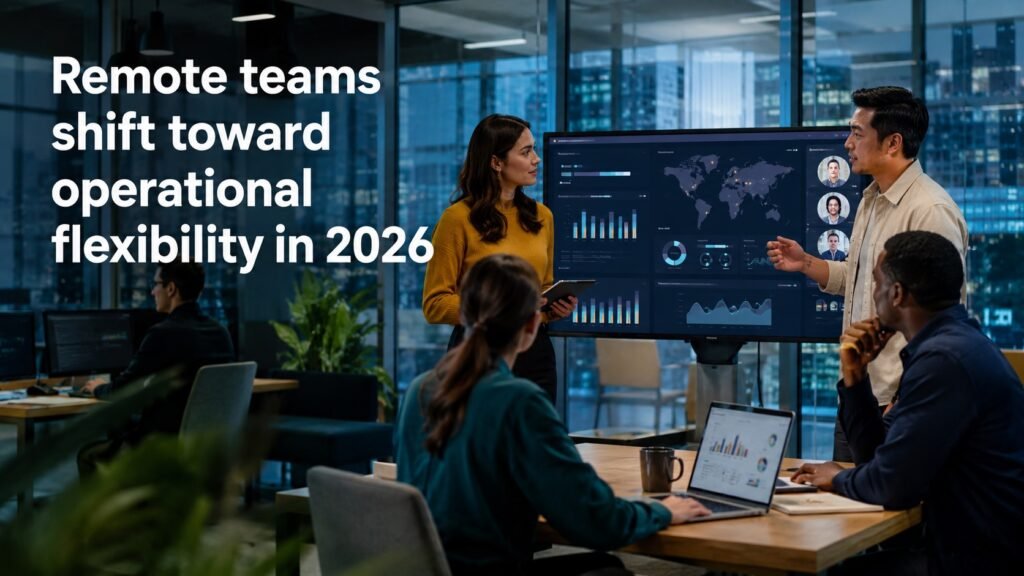
Remote workforce strategies across the United States are continuing to evolve in 2026 as businesses place greater emphasis on operational flexibility, leaner team structures, and measurable productivity outcomes.
Rather than aggressively expanding headcount, many employers are refining remote hiring priorities around adaptable professionals who can manage cross-functional responsibilities, collaborate effectively in distributed environments, and work alongside AI-assisted systems.
Across SaaS, customer support, operations, analytics, marketing, and digital business services, hiring activity remains active — but increasingly selective — as organizations focus on sustainable remote workforce models.
Operational Flexibility Becoming a Major Workforce Priority
Recent workforce discussions and employment trend reports suggest businesses are shifting away from rapid remote expansion strategies that defined earlier phases of distributed work adoption.
Instead, companies are increasingly prioritizing operational flexibility — building smaller, highly adaptable remote teams capable of handling evolving business conditions, changing workloads, and AI-supported workflows.
Industries including software development, customer operations, administrative support, cybersecurity, and digital services continue adjusting hiring strategies around efficiency, collaboration, and productivity stability rather than workforce size alone.
Many employers are also reevaluating how remote teams communicate, manage projects, and maintain performance visibility across distributed environments.
AI-Assisted Workflows Continue Reshaping Remote Operations
AI-assisted workplace systems are increasingly influencing how companies structure remote operations in 2026. Businesses are integrating automation into scheduling, reporting, analytics, communication management, documentation, and customer-facing workflows.
Rather than replacing entire professional roles, many organizations are redesigning workflows so employees can operate more efficiently with digital support systems.
This trend is contributing to rising demand for professionals who combine technical adaptability with communication skills, independent execution, and remote collaboration experience.
Employers continue emphasizing practical productivity outcomes, workflow management, and operational responsiveness as remote work environments become more mature and structured.
Industry and Workforce Impact
The evolving remote work landscape is creating noticeable changes across hiring behavior, workforce planning, and professional expectations.
Remote-first and hybrid organizations are increasingly focusing on specialized hiring rather than broad workforce growth, particularly in technology, operations, customer success, and business support functions.
For professionals, adaptability is becoming a stronger long-term workplace advantage. Candidates with experience using digital collaboration tools, AI-supported systems, analytics platforms, and remote productivity workflows may continue seeing stronger employment opportunities.
At the same time, companies are placing more attention on retention, operational efficiency, and scalable remote infrastructure as economic caution continues influencing workforce decisions.
What This Means for Job Seekers and Employers
For job seekers, the changing environment highlights the growing importance of flexibility, communication skills, technical familiarity, and measurable remote work performance.
Professionals who can adapt quickly to evolving workplace systems while maintaining productivity across distributed teams may remain competitive in the modern remote labor market.
For employers, refining remote workforce structures may help balance operational efficiency with continued access to national and global talent pools.
Businesses are increasingly seeking sustainable remote work models that support long-term productivity without relying on large-scale workforce expansion.
Closing Summary
The US remote workforce in 2026 continues transitioning into a more structured and efficiency-focused phase shaped by operational flexibility, AI-assisted workflows, and selective hiring strategies.
While remote hiring activity remains active across many industries, businesses are increasingly prioritizing adaptable professionals, productivity-driven operations, and sustainable workforce planning models.
As digital workplace systems continue evolving, remote work itself is becoming less about workforce scale and more about operational effectiveness, collaboration quality, and long-term business resilience.
Explore Remote Job Opportunities
Explore verified remote opportunities, workforce trends, and flexible career paths through WorkinVirtual’s growing remote work platform.
You can also explore our remote jobs hub, discover companies actively building distributed teams in our companies hiring section, or browse beginner-friendly opportunities in our entry-level remote jobs category.
Editorial Note: WorkinVirtual News covers remote workforce transformation, workplace productivity trends, digital operations, hiring behavior changes, and the future of distributed work across the United States.