

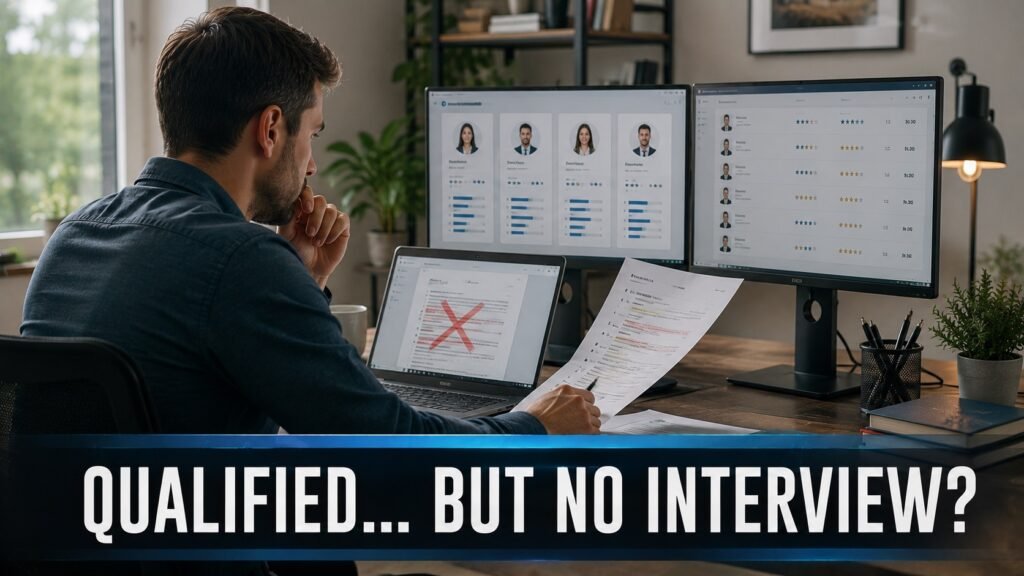
You read the job description carefully. You had the required experience, the right skills, and even some of the preferred qualifications. You submitted your application feeling confident.
Then… nothing.
If this has happened more than once, you are not alone. Meeting the requirements is important, but recruiters compare your application against many others. The candidate who receives the interview invitation is often the one who demonstrates the strongest match—not just someone who meets the minimum requirements.
Here are six reasons you may be missing interviews and what you can do before your next application.
1. Another Candidate Matched The Role Better
Meeting the requirements does not always mean you are the strongest match.
Recruiters compare every application they receive. If another candidate demonstrates more relevant achievements, software experience, industry knowledge, or recent experience, they may move ahead first.
Before applying, compare your resume with the vacancy using the WorkinVirtual Job Match Score to identify areas where you can improve your application.
2. Your Resume Doesn’t Highlight Your Best Experience
Recruiters should immediately understand why you are a good fit.
If your strongest experience is buried several pages down or mixed with unrelated information, recruiters may never notice it.
Move your most relevant experience, achievements, and technical skills closer to the top of your resume so they are visible within seconds.
Review your resume using the WorkinVirtual Resume Improvement Advisor before sending another application.
3. Your Skills Are Not Presented Clearly
Having the right skills and showing them effectively are two different things.
Recruiters often scan for specific software, customer support experience, administrative tasks, communication skills, spreadsheets, CRM systems, scheduling tools, or project management platforms.
If those skills are difficult to find, your resume may appear less relevant than it actually is.
Use the WorkinVirtual Skills Gap Analyzer to identify important skills employers expect to see.
4. You Applied After The Recruiter Already Had Strong Candidates
Timing can influence hiring decisions.
Many remote positions receive hundreds of applications within the first few days. Applying earlier often improves your chances of receiving a full review.
Visit the WorkinVirtual Job Board regularly to discover newly published remote opportunities.
5. You Are Depending Only On Applications
Many employers actively search candidate databases instead of waiting for applications.
If your resume is not visible, recruiters cannot discover your profile during those searches.
Upload your resume to improve your visibility with employers recruiting through WorkinVirtual.
6. You Never Improve Between Applications
Sending the same resume repeatedly usually produces the same results.
After every group of applications, review what happened. Which roles generated interviews? Which industries responded? Which resume version performed best?
Track your applications with the Remote Application Tracker so you can improve your strategy instead of repeating it.
Your Next Interview Starts Before You Apply
The quality of your preparation often determines whether you receive an interview invitation.
Before submitting your next application:
- Improve your resume.
- Check how well your experience matches the role.
- Identify missing skills.
- Upload your resume for employer visibility.
- Track your applications and results.
Once you are ready, explore opportunities that match your background.
Editor Note: Getting rejected does not always mean you lack qualifications. It often means another application communicated a stronger match. Improving how you present your experience can make a significant difference in future hiring decisions.
Turn Your Next Application Into A Stronger One
Before applying again, use WorkinVirtual tools to improve your resume, measure your job match, identify missing skills, and increase your visibility to employers.