

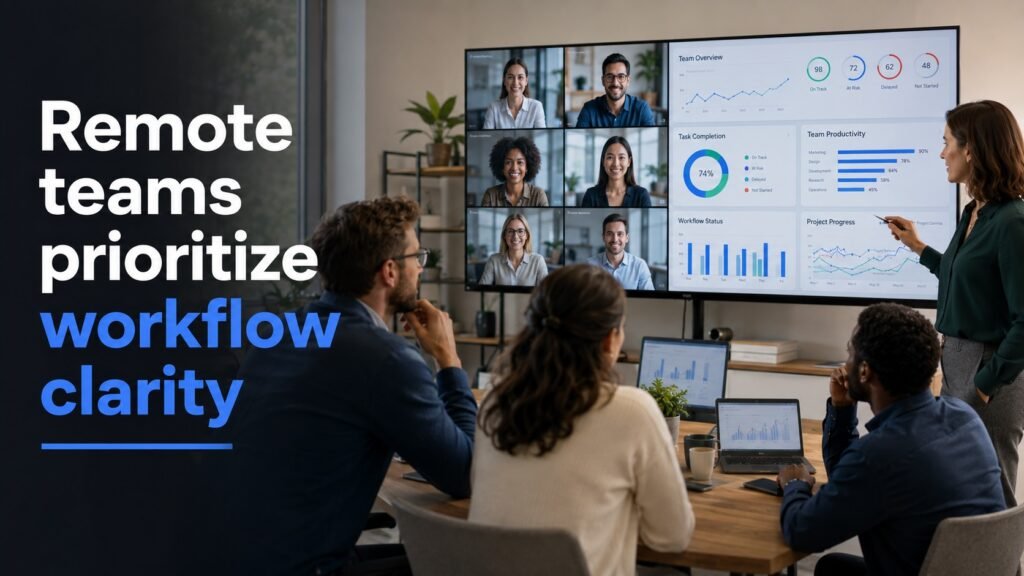
Remote work continues evolving in 2026 as employers shift their focus from workforce expansion toward operational effectiveness.
Across technology, SaaS, customer operations, digital services, and distributed business teams, employers are increasingly investing in workflow visibility, communication systems, productivity infrastructure, and AI-assisted operations rather than aggressively increasing headcount.
The trend reflects a broader workplace transformation taking place across the United States as organizations seek sustainable performance from remote and hybrid teams.
Quick Highlights
- Remote organizations are placing greater emphasis on workflow visibility and execution quality.
- AI-assisted tools are helping streamline routine operational processes.
- Hiring remains active, but workforce expansion is becoming more selective.
- Documentation, collaboration systems, and productivity workflows are gaining strategic importance.
- Operational clarity is emerging as a competitive advantage for distributed teams.
What Current Workforce Trends Suggest
Several major workforce studies published over the past two years point toward a growing focus on workplace productivity and operational effectiveness.
Microsoft’s Work Trend Index has highlighted how organizations are increasingly integrating AI into everyday workflows to improve efficiency and reduce repetitive work. LinkedIn workforce research continues showing strong demand for professionals who can adapt to evolving workplace technologies and collaborate effectively across distributed environments.
Meanwhile, workplace studies from Gallup, Gartner, and McKinsey have repeatedly emphasized the importance of communication quality, employee productivity systems, workflow design, and operational agility as organizations refine long-term workplace strategies.
Collectively, these signals suggest employers are increasingly focused on improving how work gets done rather than simply increasing workforce size.
Why This Trend Is Emerging in 2026
Following several years of rapid workplace transformation, many organizations have reached a more mature stage of remote and hybrid work adoption.
Business leaders are now evaluating how distributed teams operate on a day-to-day basis, how information flows through organizations, and how productivity can be maintained during changing economic conditions.
Rather than measuring success primarily through headcount growth, companies are increasingly evaluating execution quality, operational consistency, communication effectiveness, and team adaptability.
This shift is contributing to a growing emphasis on workforce optimization rather than workforce expansion.
How Employers Are Responding
Many employers are investing in collaboration platforms, workflow automation, project visibility tools, knowledge management systems, and AI-assisted productivity software.
Remote teams are increasingly adopting structured documentation practices, clearer communication standards, and more transparent project management processes.
Businesses are also becoming more selective about hiring, often prioritizing candidates who can operate effectively within modern digital workplace environments and contribute measurable value across distributed teams.
The result is a workplace environment where operational effectiveness is becoming just as important as technical expertise.
Industry Impact
The trend is influencing hiring behavior across software development, customer support, operations, analytics, marketing, project management, and remote business services.
Organizations continue hiring for specialized positions, but workforce planning discussions increasingly center on productivity outcomes, workflow design, collaboration quality, and sustainable operational performance.
For many employers, building smaller, highly coordinated teams is becoming a more attractive strategy than broad workforce expansion.
What Professionals Should Watch
Remote professionals may benefit from focusing on communication skills, workflow management, digital collaboration, documentation practices, and AI-assisted productivity tools.
As distributed work environments continue evolving, employers are increasingly rewarding adaptability, accountability, operational awareness, and the ability to work effectively across digital systems.
Professionals who combine technical capability with strong execution habits and workplace flexibility may remain well-positioned as workforce strategies continue shifting.
Closing Summary
The future of remote work in 2026 appears increasingly focused on operational excellence rather than rapid workforce expansion.
While hiring activity remains active across many industries, organizations are placing greater emphasis on workflow clarity, productivity systems, communication quality, and AI-assisted operational efficiency.
For employers and professionals alike, the ability to operate effectively within structured digital workplaces is becoming one of the defining characteristics of the next phase of remote work.
Explore Remote Job Opportunities
Discover verified remote jobs, explore companies hiring remote workers in our Companies Hiring hub, follow the latest remote work trends, or browse remote jobs across WorkinVirtual.
Editorial Note: This article is based on publicly discussed workforce trends, employer hiring behavior, workplace productivity research, and remote work studies published throughout 2025–2026, including workforce observations from Microsoft Work Trend Index, Gallup workplace research, LinkedIn workforce insights, Gartner workplace studies, and McKinsey productivity research.