

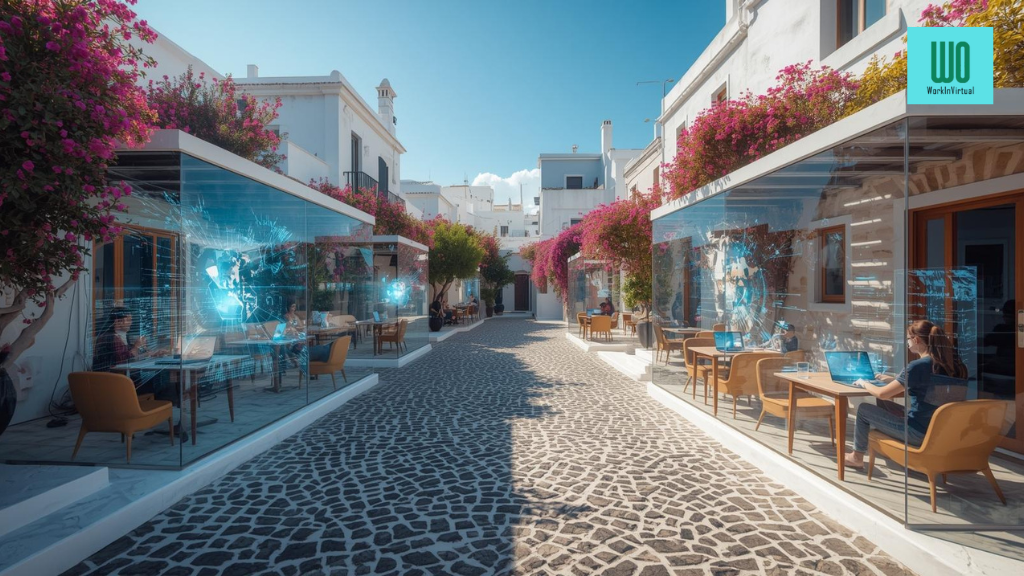
Imagine sipping coffee in a quiet Mediterranean village while your laptop hums on a desk powered by an AI-managed energy grid. Around you, cobblestone streets are buzzing with remote workers from across the globe. Don’t think it is a futuristic daydream anymore because it is happening right now in what are being called digital nomad villages.
These towns are reinventing themselves by blending tradition with cutting-edge AI, and the results are attracting a wave of freelancers, entrepreneurs, and remote employees who once thought they could only thrive in cities.
What Makes Digital Nomad Villages Different From Regular Remote Work Hubs
Unlike co-living spaces or coworking hubs in big cities, these villages are built with AI at the core. Think of them as smart ecosystems rather than just work-friendly towns. Small communities are adopting AI-driven infrastructure that goes beyond fast Wi-Fi.
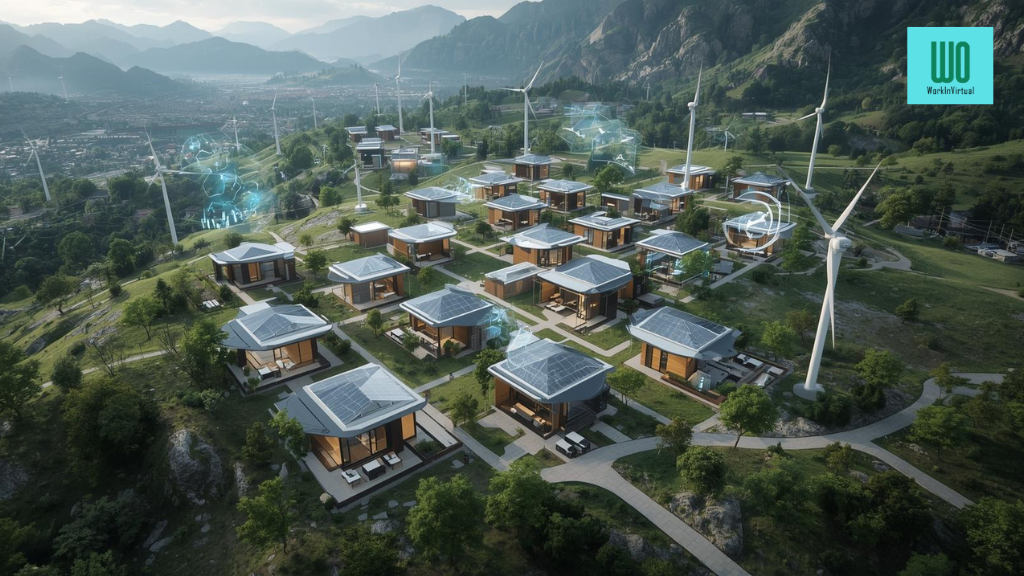
- Energy Grids That Think Ahead: AI balances renewable energy and predicts when solar power or wind energy will peak. This not only lowers electricity bills but also ensures fewer blackouts (something every remote worker fears during a Zoom call).
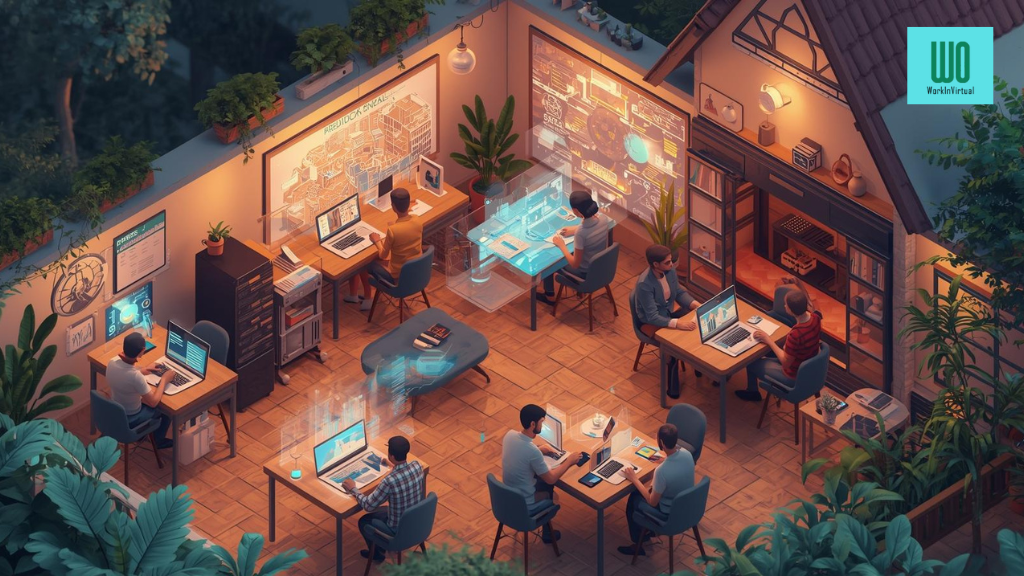
- Coworking Automation: AI manages bookings, lighting, temperature, and even coffee machines in shared spaces, freeing managers from micro-tasks.
- Predictive Urban Planning: Town planners now have the power of AI to predict population surges, housing needs, and even which streets need better lighting. This makes growth sustainable, instead of chaotic.
In short, these are not just work-friendly towns. They are work-optimized towns.
How Do Small Towns Attract Remote Workers With AI
One question that often pops up is how a sleepy coastal or mountain town suddenly becomes a hotspot for digital nomads. The answer is simple: lifestyle plus infrastructure.
Remote workers crave nature, affordability, and community, which AI makes it possible to offer these without sacrificing modern comforts. For example:
- Madeira, Portugal, launched one of the first digital nomad villages. AI-supported energy systems kept costs low while coworking spaces ran almost fully automated. Within months, Madeira attracted thousands of remote workers.
- Chiang Mai, Thailand, is experimenting with AI-based transport and predictive housing demand. By knowing in advance how many workers may settle in certain neighborhoods, the city avoids overcrowding and rising rents. According to Statista, around 5 percent of digital nomads prefer to stay in Thailand.
- Estonian Towns are quietly building AI-backed e-services where everything from business registration to paying utility bills is paperless. This seamless experience is a magnet for tech-savvy freelancers.
The secret is simple: combine affordability, culture, and AI-driven reliability, and workers will come.
Can AI Really Build Communities Instead of Just Workspaces
Here is where the story gets interesting. AI in digital nomad villages is not only about keeping the lights on or managing coworking desks. It is also used to foster connections.
Some coworking platforms use AI to match freelancers with complementary skills, encouraging collaboration. Others analyze community feedback to recommend new events, such as coding bootcamps or art festivals. One village in Spain even uses AI to suggest walking trails based on community mood data (yes, you read that right).
So while AI might not join you for tapas or late-night brainstorming, it certainly sets the stage for people to connect more meaningfully.
What Is The Future of AI-Powered Digital Nomad Villages
Every trend has skeptics. Some ask if these towns are like marketing gimmicks, but facts tell a different story. According to a report, the number of digital nomads worldwide is expected to cross 1 billion by 2035. With that kind of demand, places that provide both charm and AI-driven stability will win big.
AI also helps local governments manage this influx without alienating locals. Predictive traffic systems, balanced rental prices, and AI-monitored energy distribution prevent the “gentrification effect” seen in many tourist towns.
In other words, it’s the beginning of a long-term shift, where small towns punch above their weight thanks to technology.
Why Remote Workers Should Consider Moving to One
If you are a freelancer tired of noisy coffee shops or a remote employee stuck in an overpriced city apartment, these AI-powered villages may be your golden ticket.
Here is why:
- Lower living costs with smarter energy savings
- High-speed internet that rarely fails
- A built-in global community curated with AI matchmaking
- Nature and culture at your doorstep
- A chance to work and live in balance rather than burnout
It is not utopia, but it is close, and unlike sci-fi movies, you do not need a time machine to get there. You need a one-way ticket and a laptop.