

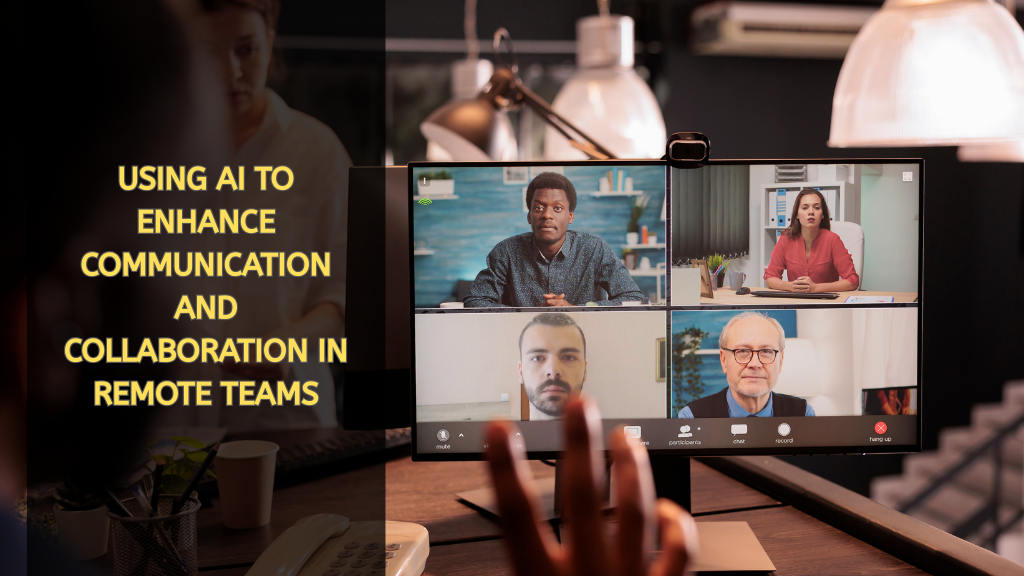
Working remotely can sometimes feel like being in a video game. Everyone is playing the same mission, but half the time, you cannot hear the voice chat clearly. That is where AI steps in. It is the noise-canceling headset that makes the mission smoother.
I have worked in distributed teams myself. Imagine joining a call at 11 pm because the other side of the globe just woke up. You are half-asleep, trying to remember action points, and the meeting ends with everyone saying, “We will figure it out later.” Later often turns into never. AI meeting assistants changed that for me. They transcribed, summarized, and highlighted tasks in minutes. That saved me from the dreaded “what did we agree on” Slack messages the next day.
Why Remote Teams Struggle Without AI
Remote teams often struggle without AI because:
- Messages lose tone and intent in text.
- Scheduling across different time zones feels like trying to line up planets in orbit.
- Information is scattered across too many tools.
- Employees often feel disconnected from one another.
How AI Creates Real Impact
AI assistants are not just fancy note-takers. They capture action points, auto-generate summaries, and even highlight when a conversation is veering off-topic. When I started using Otter.ai with a remote client, I stopped worrying about missing details while focusing on asking smarter questions.
Comparison
- A human note-taker usually takes 20 minutes after a call to finalize notes.
- An AI assistant sends the full transcript and highlights in 30 seconds.
Enterprise AI That Knows Your Team
Unlike generic AI, enterprise-level AI learns how your specific team works. For example, Atlassian’s AI Rovo saved users 20 hours every month by automatically surfacing relevant documents and tasks. Instead of hunting for the latest client presentation, AI quietly delivered it when needed.
In my last project, searching Google Drive felt like digging through an endless digital attic. After integrating an AI search assistant, I found files in seconds. That alone made me trust the tool as much as a dependable teammate.
Feedback Without The Awkward Silence
One of the most fascinating tools I came across is tAIfa. It observes team interactions and gives real-time feedback. It is like having a coach sitting quietly in the background, nudging you toward better communication. No more yearly reviews that feel like dentist appointments.
AI As A Creative Sidekick
In a recent study by MIT, teams that collaborated with AI agents saw productivity jump by 60 percent. Humans leaned on creativity, while AI edited and structured their output.
I once tried writing a long-form whitepaper without AI. It felt like climbing a mountain with bricks in my backpack. Then I used a generative AI assistant for structure and formatting. Suddenly, the bricks were gone, and I had energy left to focus on insights.
Generative AI Versus Traditional Teams
Studies show that teams with generative AI outperformed purely human teams. But interestingly, adding more AIs did not help further. It is proof that one strong AI teammate is enough. Think of it as having one really good coder on your team instead of five interns still learning the ropes.
The Inclusive Edge of AI
Remote work is global, which means accents, languages, and writing styles vary. AI breaks those barriers with live translation, transcription, and tone adjustment. That levels the playing field for everyone.
I once collaborated with a designer in Japan and a developer in Brazil. Our English levels varied. AI-powered translation in Slack was the bridge. It was not perfect, but it kept the workflow moving smoothly without misunderstandings.
Putting It All Together
- reduces noise and creates clarity.
- It saves time by automating repetitive tasks.
- It boosts creativity by letting humans focus on what they do best.
- It fosters inclusion by breaking communication barriers.
Think of AI as a co-pilot in your remote spaceship. It reads your dashboards, points out turbulence, and even reminds you to refuel. The humans are still in control, but now the ride is smoother and faster.
Key Takeaway at a Glance
Communication clarity
- Smart summaries and transcripts
- Tone and sentiment insights
- Reduced misunderstandings
Productivity and creativity
- Time saved from repetitive admin
- Stronger focus on high-value work
- Better workflow management
Inclusivity and wellness
- Live translation for diverse teams
- Less cognitive overload
- More balanced workload distribution