

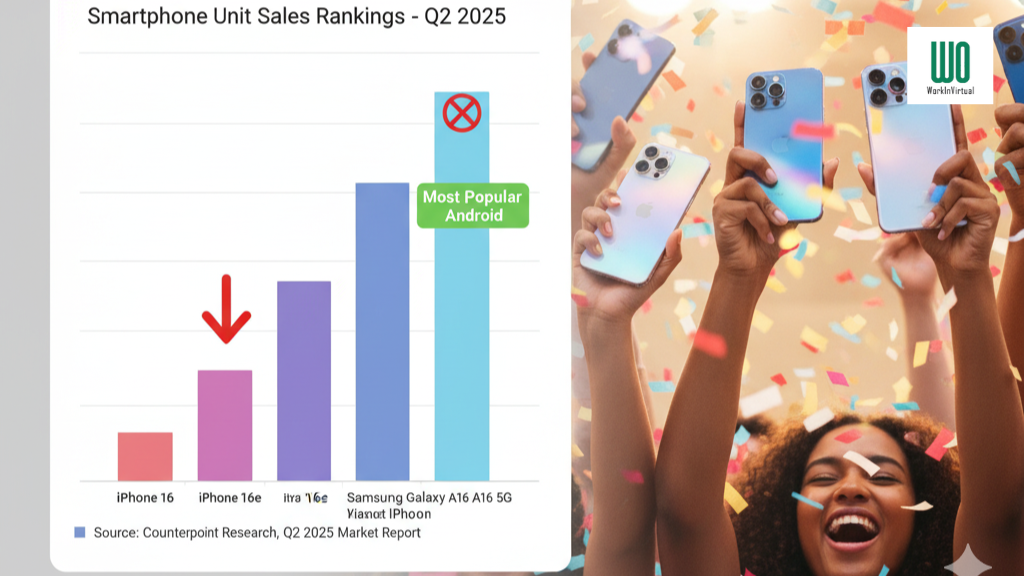
iPhone 16e Stunned by Galaxy A-Series, While iPhone 16 Plus Vanishes from Top Ten
A new report from Counterpoint Research has sent ripples through the smartphone industry, revealing a surprising upset in the second quarter of 2025. While Apple’s latest iPhone 16 series secured the coveted top three positions in global sales, a significant challenge emerged from an unexpected quarter: Samsung’s line of highly affordable smartphones. This shift suggests a growing consumer appetite for value, even as premium devices continue to attract high-end buyers.
The data confirms the continued strong performance of Apple’s flagship devices. The standard iPhone 16 claimed the top spot as the best-selling smartphone of the quarter, a testament to its broad appeal and brand loyalty. Following closely were the iPhone 16 Pro Max and the iPhone 16 Pro, securing second and third place, respectively. This familiar pattern reinforces Apple’s ability to consistently capture a large share of the high-end market. However, a glaring omission from the top ten list was the iPhone 16 Plus. Its complete absence raises questions about its market positioning and overall consumer reception, perhaps explaining Apple’s strategic pivot with the recent launch of the iPhone Air. The market’s reception to the ‘Plus’ variant clearly indicates a need for re-evaluation within Apple’s product strategy.
Samsung’s Budget Dominance Undeniable
The real headline, however, belongs to Samsung. Their budget-friendly Galaxy A16 5G stormed into fourth place, making it the most popular Android smartphone globally during Q2 2025. This isn’t an isolated incident; Samsung’s Galaxy A1x series has a history of leading Android sales for multiple quarters. This consistent performance underscores the enduring appeal of the phone’s competitive pricing and robust features, effectively leveraging Samsung’s extensive global distribution network and brand recognition. Hot on its heels was the Galaxy A06 4G, securing an impressive fifth position.
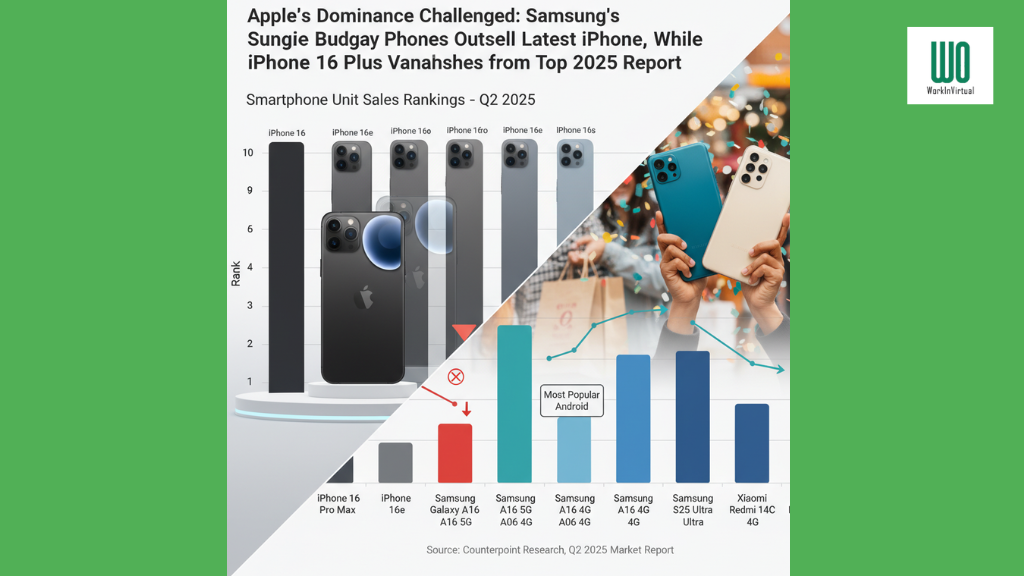
What makes this quarter particularly compelling is the confrontation between Samsung’s budget offerings and Apple’s entry-level device. Both the Galaxy A16 5G and the Galaxy A06 4G managed to outsell the iPhone 16e, which landed in sixth place. This is a significant victory for Samsung, as its highly affordable models managed to edge out Apple’s newest and most budget-conscious iPhone. Critically, launch timing cannot be cited as an excuse for Apple; the iPhone 16e had already been available for a full quarter before this reporting period. This suggests a direct preference among a substantial segment of consumers for Samsung’s value proposition.
The Price War: A Key Factor
The primary driver behind Samsung’s unexpected triumph over the iPhone 16e is unequivocally pricing. The iPhone 16e launched with a price tag of $599, positioning it as Apple’s more accessible option. In stark contrast, the Galaxy A16 5G retails for an estimated $200, and the Galaxy A06 4G is even more affordable at approximately $110. This vast price differential clearly influenced consumer purchasing decisions, demonstrating that for a significant portion of the market, cost remains a paramount factor. This turn of events is particularly noteworthy given Apple’s usual ability to command premium prices and still dominate sales charts with its latest releases. It signals a potential shift in market dynamics where sheer affordability can, at times, trump brand prestige even for a tech giant like Apple.
Beyond the Duopoly: Emerging Players
Samsung’s presence extended further down the list, with the Galaxy A16 4G securing seventh place and the premium Galaxy S25 Ultra taking eighth. The consistent appearance of Galaxy Ultra phones in the Q2 top ten for several years highlights their sustained popularity among users seeking high-end Android experiences.
Encouragingly, the report also offers a glimpse beyond the Apple-Samsung duopoly. The Xiaomi Redmi 14C 4G emerged as the ninth most popular phone of the quarter, offering a welcome alternative for consumers. This follows the success of its predecessor, the Redmi 13C 4G, which also cracked the top ten the previous year. Counterpoint attributes Xiaomi’s strong performance to its strategic focus on and success in “emerging” regions, particularly in Latin America and the Middle East. This indicates a growing global market fragmentation, with regional preferences and economic factors playing an increasingly vital role in smartphone sales.