

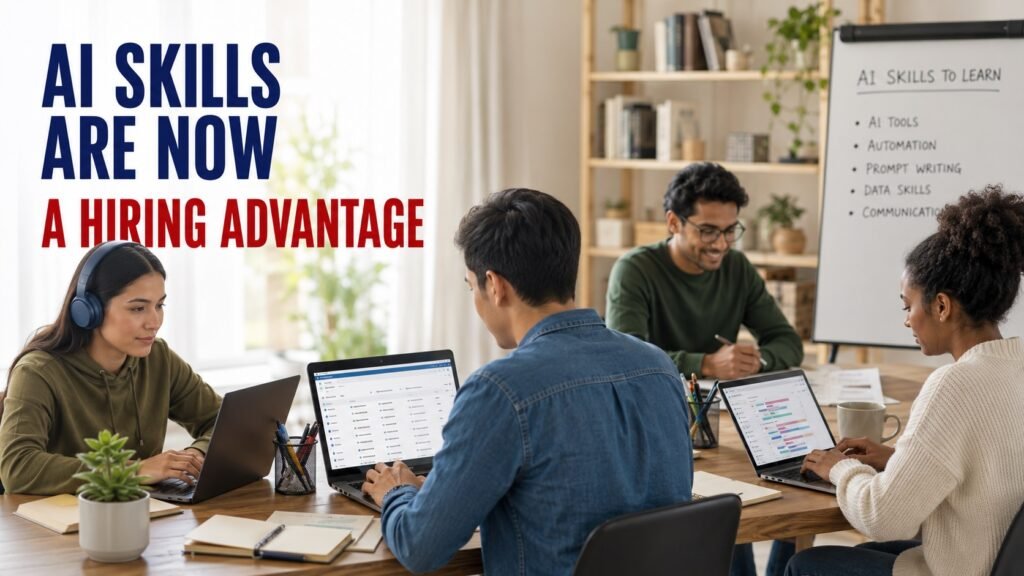
AI Skills Are Becoming a Hiring Advantage: How Entry-Level Remote Job Seekers Can Stay Competitive in 2026
Artificial intelligence continues to influence how employers recruit, evaluate, and onboard new employees. This week’s workforce intelligence stories show a consistent pattern: companies are still hiring, but they increasingly expect candidates to demonstrate practical digital skills alongside strong communication and problem-solving abilities.
For WorkinVirtual readers, this is not a warning to stop applying for remote jobs. It is a signal to adapt your job search strategy. Employers are looking for people who can use AI to work more efficiently—not candidates who simply list AI on a resume.
This Hiring Intelligence update explains what has changed, which remote careers may benefit, and the practical actions you can take this week to improve your chances of getting hired.
What Happened?
Recent workforce reports and employer commentary indicate that AI adoption is continuing across many industries. While AI is helping automate repetitive tasks, employers are also increasing demand for candidates who can combine technology with human skills such as communication, customer service, project coordination, and decision-making.
Rather than replacing every entry-level role, AI is changing what employers expect from applicants during the hiring process.
Why This Matters for Remote Job Seekers
Remote positions often attract hundreds of applications within days. Employers therefore look for candidates who can become productive quickly.
If your resume demonstrates that you can work with modern workplace tools, communicate effectively, stay organised, and solve problems independently, you may stand out against applicants who rely only on academic qualifications.
The hiring market is becoming more skills-driven than experience-driven for many entry-level remote positions.
Remote Job Categories Worth Watching
Based on this week’s workforce intelligence, these remote career paths continue to show strong long-term potential:
- Customer Support Representative
- Virtual Assistant
- Project Coordinator
- Operations Assistant
- Administrative Coordinator
- Customer Success Associate
- Remote Data & Reporting Support
- Junior Marketing Coordinator
Many employers hiring for these roles now expect applicants to be comfortable using AI-powered workplace tools while maintaining strong communication and organisational skills.
Companies Job Seekers Should Watch
Instead of focusing only on AI headlines, monitor employers that regularly recruit remote professionals across customer support, operations, project management, and administrative teams.
- GitLab
- Automattic
- HubSpot
- Zapier
- Canva
- Shopify
- Dropbox
- Airbnb
Always apply through each company’s official careers page and review role requirements carefully before submitting your application.
What Employers Are Looking For
- Professional written communication
- AI productivity tools
- Customer service skills
- Project coordination
- Time management
- Problem-solving
- Spreadsheet and reporting skills
- Adaptability and continuous learning
What Job Seekers Should Do This Week
1. Add Practical AI Skills to Your Resume
Do not simply write “AI tools” in a skills section. Explain how you use AI to support real work, such as summarising meetings, drafting documents, organising research, preparing reports, improving customer responses, or managing repetitive tasks.
2. Create Proof of Your Remote-Work Skills
Entry-level candidates can stand out by showing practical examples. A sample customer support response, spreadsheet, project tracker, meeting summary, research document, or workflow guide can help employers understand what you can do.
3. Apply to Roles That Match Your Current Strengths
Do not apply only to jobs with impressive titles. Focus on roles where your communication, organisation, customer service, administrative, or coordination skills closely match the employer’s needs.
4. Apply Early and Tailor Each Application
Remote openings can attract a large number of applicants. Applying early and adjusting your resume to reflect the role’s most important requirements can improve your chances of being reviewed.
5. Monitor Official Employer Career Pages
Employer career pages often list new opportunities before they appear widely across third-party platforms. Save the official careers pages of companies you are genuinely interested in and review them regularly.
How to Evaluate an AI-Related Job Listing
Not every job mentioning AI requires advanced technical experience. Read the responsibilities carefully and look for the actual workplace need.
- Does the employer want someone to use AI for productivity or build AI systems?
- Is the role focused on customer service, research, administration, operations, or software development?
- Which human skills remain central to the position?
- Does the employer provide training or expect previous experience?
- Can you demonstrate similar work through a project, certification, internship, or volunteer experience?
Entry-level candidates should not reject themselves simply because “AI” appears in a job description. Many employers are looking for confident users of workplace technology rather than AI engineers.
Where to Look for Opportunities
Use the hiring trend as a guide, but move quickly from reading to applying.
- Browse newly published roles on the WorkinVirtual jobs board.
- Review entry-level, customer support, virtual assistant, operations, and project coordination opportunities.
- Visit official company career pages before applying.
- Confirm the role’s location, work-authorisation, schedule, and remote-work requirements.
- Avoid listings that request payment, sensitive financial details, or communication only through informal messaging apps.
Find Your Next Remote Opportunity
Do not let another hiring trend become information you read and forget. Use it to improve your application strategy and start identifying suitable roles today.
Which Skill Should You Improve First?
Choose the skill most closely connected to the jobs you want.
- Customer support: Written communication, ticketing systems, de-escalation, and AI-assisted response drafting
- Virtual assistance: Calendar management, research, documentation, spreadsheets, and task automation
- Project coordination: Task tracking, meeting notes, stakeholder updates, and workflow organisation
- Operations support: Reporting, process documentation, data accuracy, and cross-team communication
- Junior marketing: Research, content support, campaign coordination, analytics, and responsible AI use
Building one relevant skill deeply is often more useful than collecting several unrelated certificates.
Identify the Skills Employers May Expect
This workforce trend directly affects employer skill requirements. The Remote Skills Gap Analyzer can help you compare your current strengths with the type of remote work you want to pursue.
The WorkinVirtual Hiring Intelligence Takeaway
AI is not creating the same outcome for every job or every candidate. It is reducing the value of some repetitive tasks while increasing the value of people who can communicate clearly, solve problems, organise work, support customers, and use technology responsibly.
For entry-level remote job seekers, the best response is not fear. It is preparation.
Build practical evidence, improve one job-relevant skill, monitor real employers, and continue applying to roles where your abilities can create immediate value.
Editorial note: WorkinVirtual publishes hiring intelligence to help job seekers take practical action. Company names are included as employers to monitor, not as confirmation that every company currently has a suitable remote opening. Always verify current roles through official career pages before applying.