

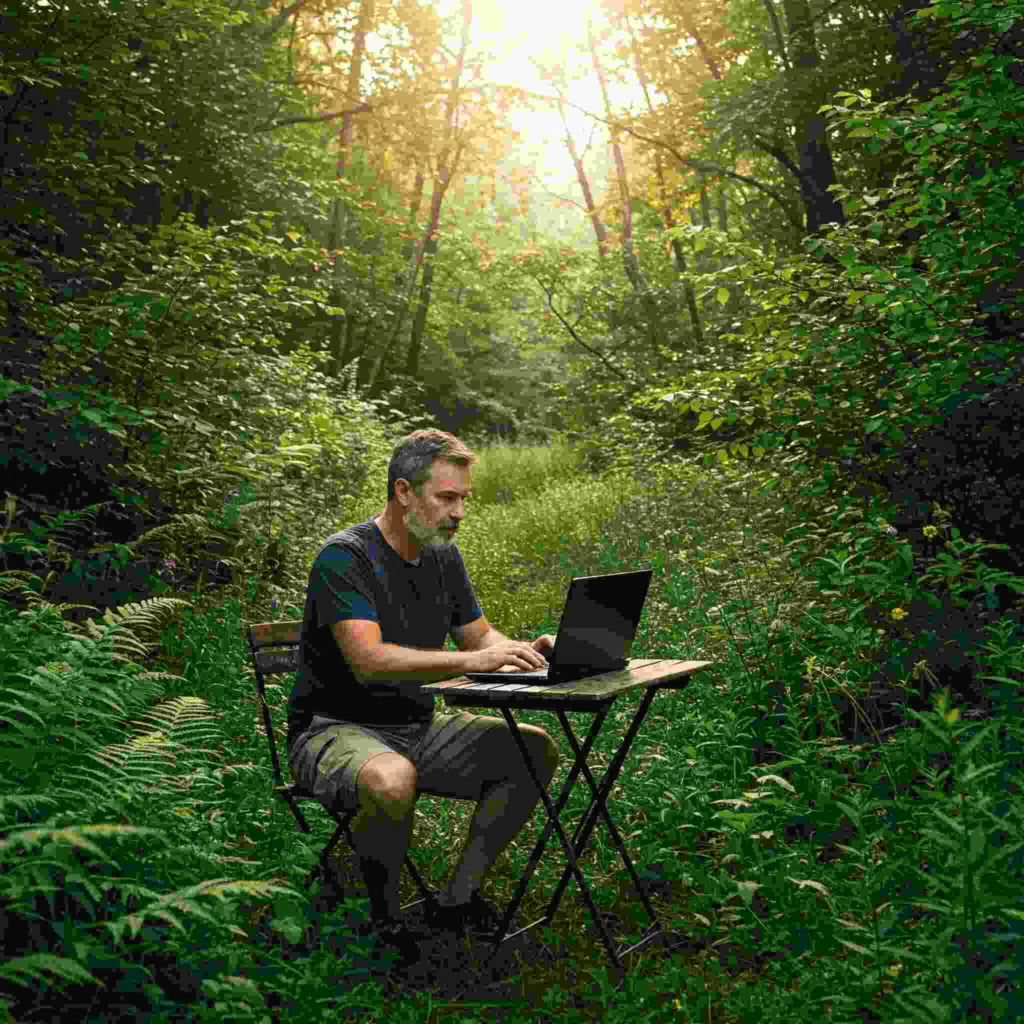
Biophilic home-office design means creating repeated, practical contact with nature—through a view, daylight, plants, natural patterns or outdoor breaks—while keeping the workspace safe and functional. Start with the no-cost change that solves a real problem, such as moving the desk to reduce glare while preserving a view. Test one change at a time and keep it only if comfort, focus or satisfaction improves for you. Plants and natural materials are design choices, not medical treatment.
What the reader needs to understand
World Green Building Council guidance treats access to nature as a building-design principle and names elements such as views, terraces, gardens, natural light and layout. The U.S. General Services Administration’s healthy-building resources connect design considerations with occupant experience, while also showing that indoor environmental quality includes ventilation, lighting and thermal comfort—not décor alone. For a home office, the sensible hierarchy is function and safety first, nature connection second: neutral screen visibility, accessible movement paths, stable furniture, safe cords, manageable allergens and realistic maintenance.
The practical distinction is between a claim and evidence. A title, vendor badge, attractive room, tool output or copied vacancy phrase may be a useful lead, but it is not proof. Proof is a current first-party page, a documented test, a reproducible artifact, a named reviewer, or an outcome the applicant or worker can explain honestly. This guide should help the reader decide what to do next, not create urgency around an old page.
A second distinction is between transferable principles and temporary details. Principles such as verification, accessibility, privacy, safety, testing and clear ownership remain useful. Product features, vacancy status, compensation, work arrangements, laws and organizational processes can change. Date those claims, link to the controlling source and tell the reader how to recheck them.
Skills and evidence to build
- Foundation: observe glare, heat, noise, view and movement-path problems before buying anything.
- Delivery evidence: use daylight from the side of a screen and add adjustable task lighting when needed.
- Risk control: choose non-toxic, maintainable plants only when pets, children, allergies and mold risk allow.
- Collaboration: use nature images, textures or an outdoor view when living plants are impractical.
- Proof: measure personal comfort and task completion rather than repeating universal productivity percentages.
Do not turn this list into keyword stuffing. Select the evidence that matches the current intent or live requirement, explain context and constraints, state your own contribution, and show how the result was checked. When an example contains confidential, personal, regulated or security-sensitive material, sanitize it or replace it with a personal demonstration. “I used it” is weaker than a short problem–action–control–result account.
Practical application process
- Photograph or sketch the workspace at the start of a normal week.
- Name one friction point: glare, visual fatigue, clutter, isolation or lack of a restorative break.
- Choose one low-cost intervention such as desk orientation, a nature image, a small safe plant or an outdoor break.
- Hold other variables steady for five workdays where practical.
- Record glare, comfort, interruptions and a simple completed-task measure.
- Keep, modify or reverse the change based on the diary—not on an advertising claim.
Pause whenever an authoritative page contradicts an old article. The current official source wins. Save a dated copy of the evidence used for a consequential decision, but respect terms, privacy and confidentiality. If the route, identity or claim cannot be verified, do not fill the gap with a confident assumption.
Engagement: readiness and verification worksheet
Run a five-day workspace experiment. Rate glare, thermal comfort, visual calm and task readiness from 1 to 5 at the same two times each day. Add one sentence about what changed. This small worksheet cannot establish a medical benefit, but it can prevent decorative purchases that do not solve the user’s actual problem.
Finish the worksheet with three prompts: “What is verified?”, “What is only inferred?”, and “What could cause harm if wrong?” Convert every high-risk inference into a check or an explicit caveat. This engagement device should help the reader make a better decision on the page; it should not manufacture dwell time through unnecessary slides or quizzes.
Safety, accessibility and verification
Use an independently opened official URL rather than trusting a link in an unsolicited message. Check the organization, domain, date and context. Never send money, passwords, one-time codes, identity documents or confidential work merely because a message uses a familiar logo. For job-related content, verify the requisition inside the employer portal. For health, legal, employment, accessibility, privacy or security consequences, seek an appropriately qualified professional and apply local rules.
Accessibility is part of quality. The page should use descriptive headings, plain language, keyboard-usable controls, text alternatives and instructions that do not depend only on color. Offer an alternative when a recommended activity, tool or process excludes a disability, language, device or environment. Human review must be meaningful: the reviewer needs information, time and authority to change the result.
Verification should test the risky part, not just appearance. Open citations and confirm that they support the exact claim. Recalculate numbers. Test code or workflows in a controlled environment. Check current role status, location and application route on the first-party page. Document important limitations, conflicting evidence and the date reviewed.
Stale-claim cleanup
Remove claims that a plant automatically purifies a room, increases productivity by a fixed percentage, prevents illness or treats anxiety. Remove expensive showroom assumptions. Add pet toxicity, allergy, mold, water-damage, accessibility and rental restrictions. Mark all research summaries with source and scope.
Also remove invented quotations, orphaned statistics, dead application buttons, generic “experts say” language and repeated conclusions. Replace absolute words such as “always,” “guaranteed” or “best” with scoped evidence. Preserve any useful original example only after confirming that it is accurate, non-confidential and still serves the revised intent.
FAQ
Do I need many plants?
No. A view, daylight, a nature image, natural texture or outdoor break may be more practical. Choose the element that fits your space and needs.
Can plants replace ventilation?
No. Plants are not a substitute for appropriate ventilation, moisture control or building maintenance.
What if I have allergies or pets?
Use a non-living nature cue or an outdoor view, and check plant safety with authoritative veterinary or health guidance before purchase.
How do I know whether a change works?
Track a small number of personal workspace measures for several days and keep the change only if it improves usability without creating new risks.
Internal links
- /jobs/ — discover current opportunities instead of treating an evergreen article as a live vacancy.
- /remote-resume-builder/ — convert verified requirements into evidence-led resume bullets.
- /job-scam-checker/ — inspect suspicious recruitment or tool messages.
- /salary-calculator/ — compare a verified offer or scenario, not an obsolete headline.
- /remote-work-tools/ — use the consolidated tool hub where it matches intent.
Internal-link anchors should describe the destination. Recheck that each route exists and is indexable before publication; omit or replace a route that is not live.
Official/primary sources and QA
- https://worldgbc.org/principle-3-prioritise-access-to-nature/
- https://www.gsa.gov/governmentwide-initiatives/federal-highperformance-buildings/highperformance-building-clearinghouse/health/buildings-and-health
- https://worldgbc.org/article/new-report-links-office-design-with-staff-health-and-productivity/
- https://www.epa.gov/indoor-air-quality-iaq
- https://workinvirtual.com/staying-active-while-working-from-home-exercise-tips-and-ideas/
Choose your next step
Keep your momentum with practical tools and verified remote-work opportunities.
Related guides for your next step
A fresh, topic-aware mix from the WorkinVirtual library. Suggestions rotate regularly.





Discuss this guide
Ask a useful question, share relevant experience, or add a practical correction. Helpful contributions publish immediately after automated safety checks.
Start a thoughtful discussion
Be the first member to add a question or practical insight about this topic.
Join the discussion
Sign in with your verified WorkinVirtual account to contribute. Automated safety checks keep posting quick and protect the community.
Sign in to contribute