

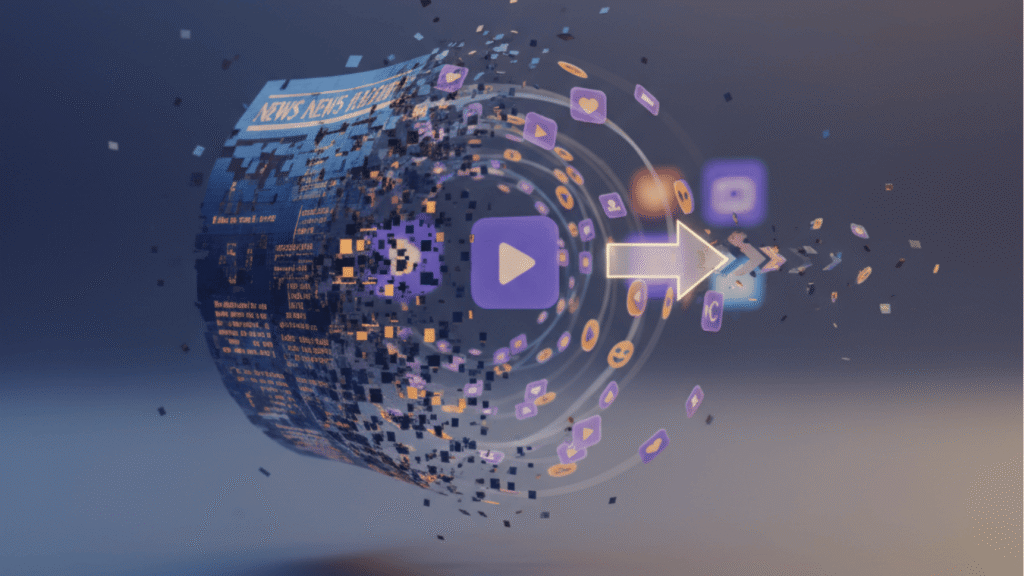
The digital relationship between news organizations and social media platforms has collapsed. New data reveals that social networks deliberately push users away from the open web, causing a drastic decline in referral traffic to major news sites. Publishers face an existential threat as their primary audience pathway closes.
Traffic Levels Hit a Historic Low
Traffic referrals from social media to the world’s top 100 media domains fell by nearly a third in just three years. According to the analysis, monthly visits peaked at an estimated 1.75 billion in late 2022. By September 2025, that volume had plummeted to only 1.218 billion, a significant drop of over 30 percent. This decline confirms a structural shift, not a temporary blip. The fall remained relentless throughout 2023 and 2024, stabilizing around the 1.24 billion mark by mid-2025. This historic low proves a weakening partnership.
Also Read: Global Content Barrier Falls! YouTube Tests AI Lip-Sync That Makes Dubbing Invisible
Video Kills the Link Star
Platforms prioritize in-app engagement above all else. Short-form video has become the dominant format on Facebook, Instagram, and YouTube. These clips compete powerfully against posts containing external links, effectively burying them in user feeds. Networks intentionally discourage behavior that sends users to independent websites. Both LinkedIn and X actively reduce the visibility of outbound links, compelling conversations to remain within their controlled environments. This strategy maximizes their own ad revenue and data capture.
The Publisher’s Financial Crisis
For news publishers, this loss is devastating. Many prominent and small outlets built their distribution models on the consistent, high-volume traffic once provided by Facebook and Twitter. The shrinking pipeline translates directly into weaker advertising returns. Smaller publishers, often highly dependent on these referrals, face the sharpest financial pain. Every lost click represents a missed opportunity for ad impressions and new subscriptions.
A Fleeting Attempt to Re-engage
Social networks have tested minor adjustments, but their commitment to reversing the slide remains mixed. X introduced an experimental link format on iOS that lets users react to posts while browsing an external page, aiming to make the interaction feel less detached. Instagram is also trying new, easier-to-use clickable link options inside posts.
Meanwhile, a new market for “link-in-bio” tools like Linktree emerged to help creators bypass the problem. While helpful for brands, these services cannot restore the steady stream of readers that traditional social referrals once delivered. The trend is clear: news links are now a secondary path, not a central source of discovery.
The open web now feels isolated from where people spend the majority of their time online. Platforms aggressively prioritize closed, video-based engagement loops, making it more challenging than ever for citizens to encounter professional, independent journalism. This trend is not an accident; it is a profound business decision.
