

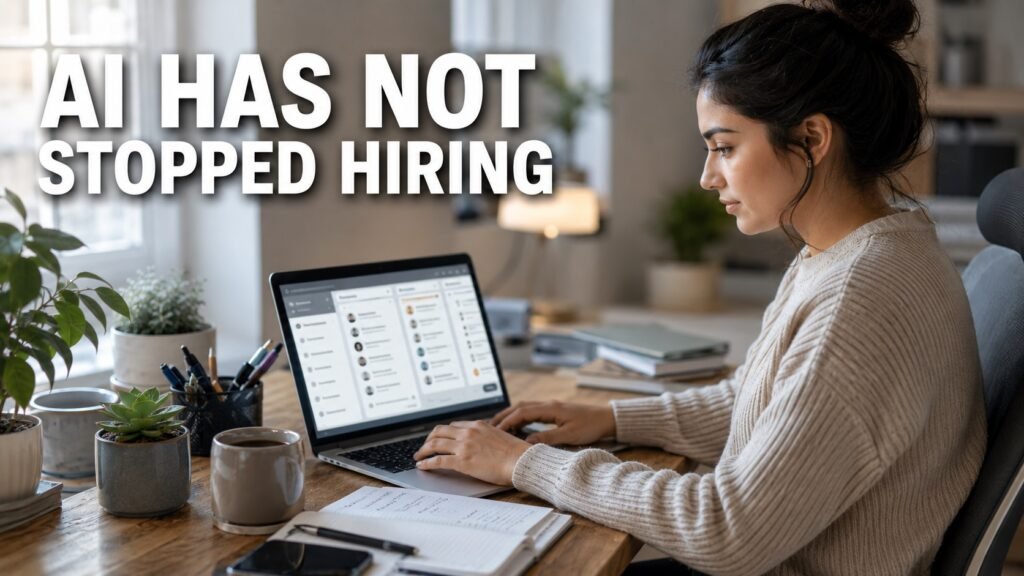
Artificial intelligence is changing the job market, but the latest workforce data does not show a complete collapse in hiring. Instead, it shows something more important for remote job seekers: employers are shifting which skills and roles they value most.
For WorkinVirtual readers, the message is clear. Do not stop applying because of AI headlines. Adjust your job search strategy, improve practical skills, and focus on remote roles where human communication, coordination, judgment, and customer support still matter.
What Happened?
Recent workforce analysis found that AI has had a limited overall impact on U.S. employment and wages so far. However, the same research suggests that jobs with higher AI substitution risk are growing more slowly than roles less exposed to automation.
This means AI is not simply removing jobs everywhere. It is reshaping where job growth is stronger and where candidates may need to adapt faster.
Why This Matters For Remote Job Seekers
Remote job seekers are often exposed to confusing headlines about AI replacing workers. The practical reality is more useful: employers still need people, but they increasingly prefer candidates who can work with technology instead of being replaced by it.
The strongest candidates will not be those who ignore AI. They will be those who combine AI productivity skills with communication, reliability, customer service, and problem-solving.
Remote Roles That Still Have Opportunity
Customer Support Representative
AI can assist with answers, but companies still need people who can handle customers with empathy, judgment, and clear communication.
Virtual Assistant
Remote assistants who can use AI for scheduling, summaries, research, and organization may become more valuable, not less.
Project Coordinator
Distributed teams still need people who can organize tasks, follow up, update documents, and keep projects moving.
Operations Assistant
Companies need remote workers who can support processes, documentation, reporting, and daily business coordination.
Skills Job Seekers Should Build Now
- AI productivity tools
- Professional written communication
- Customer support communication
- Spreadsheet and data organization
- Remote collaboration tools
- Problem-solving
- Documentation and process writing
- Project coordination
What Job Seekers Should Do This Week
1. Add One AI Skill To Your Resume
Do not simply write “AI tools.” Mention how you use them for writing, research, summaries, reporting, organization, or productivity.
2. Apply To Human-Centered Remote Roles
Focus on roles where communication, customer support, coordination, and judgment remain important.
3. Avoid Generic Applications
As employers become more selective, tailored applications will matter more than mass applying.
4. Keep Building Proof
Use small projects, volunteer work, certifications, and portfolio examples to show that you can work effectively with modern tools.
WorkinVirtual Action Plan
AI is changing hiring, but it has not removed opportunity.
Update your resume, build one practical AI-supported skill, and continue applying to remote roles where human communication and coordination matter.
Need Help Finding Skill Gaps?
Because this workforce trend is directly about changing employer skill demand, the Remote Skills Gap Analyzer may help job seekers decide what to improve next.
WorkinVirtual Workforce Intelligence: We do not publish AI news for curiosity. We publish hiring intelligence only when it helps job seekers understand where opportunity is moving and what action to take next.