

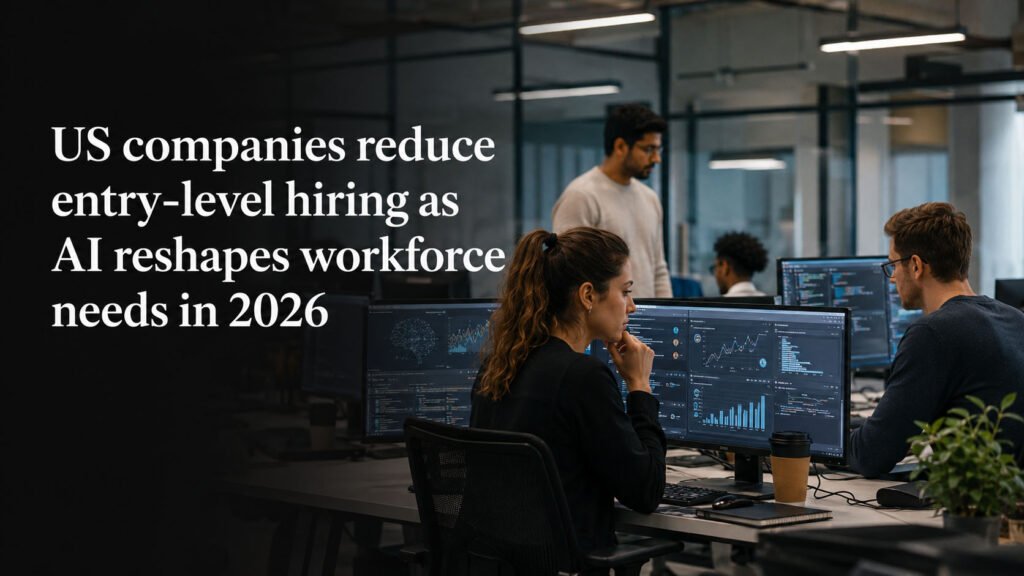
US companies are reducing entry-level hiring in several sectors during 2026 as artificial intelligence and workflow automation continue reshaping workforce priorities. Employers are increasingly focusing on efficiency, productivity, and specialized digital skills while restructuring hiring strategies across remote and hybrid teams.
Key Developments
Recent workforce trends suggest that some employers are slowing hiring for junior and repetitive-task roles as AI-powered tools become more capable of handling administrative, analytical, and operational workflows.
Industries including customer support, marketing operations, data processing, and administrative services are increasingly integrating automation systems into daily business processes. As a result, hiring demand is shifting toward professionals with technical adaptability, communication skills, and experience working alongside AI-driven tools.
At the same time, remote and hybrid workforce models remain active, particularly for positions involving oversight, decision-making, technical operations, and digital collaboration.
What This Means for Job Seekers and Employers
For job seekers, the changing workforce environment means competition may increase for traditional entry-level office and remote positions. Candidates with digital skills, AI familiarity, and specialized expertise may have stronger long-term opportunities.
Professionals entering the workforce may increasingly need to demonstrate adaptability, independent problem-solving, and comfort with automation technologies.
For employers, automation and AI integration can help improve operational efficiency while allowing businesses to maintain leaner workforce structures during uncertain economic conditions.
Closing Summary
The US labor market in 2026 is continuing to evolve as artificial intelligence reshapes workforce planning and hiring priorities. While remote work remains an important part of modern business operations, employers are becoming more selective about the roles they expand.
For professionals, building adaptable digital skills and understanding AI-assisted workflows may become increasingly important for long-term career growth in both remote and hybrid environments.
Explore Remote Job Opportunities
WorkinVirtual connects professionals with verified remote job opportunities across technology, support, operations, and digital industries.
Browse Remote JobsEditorial Note: WorkinVirtual News tracks AI workforce changes, remote hiring trends, and US employment developments to provide timely insights for job seekers and employers.