

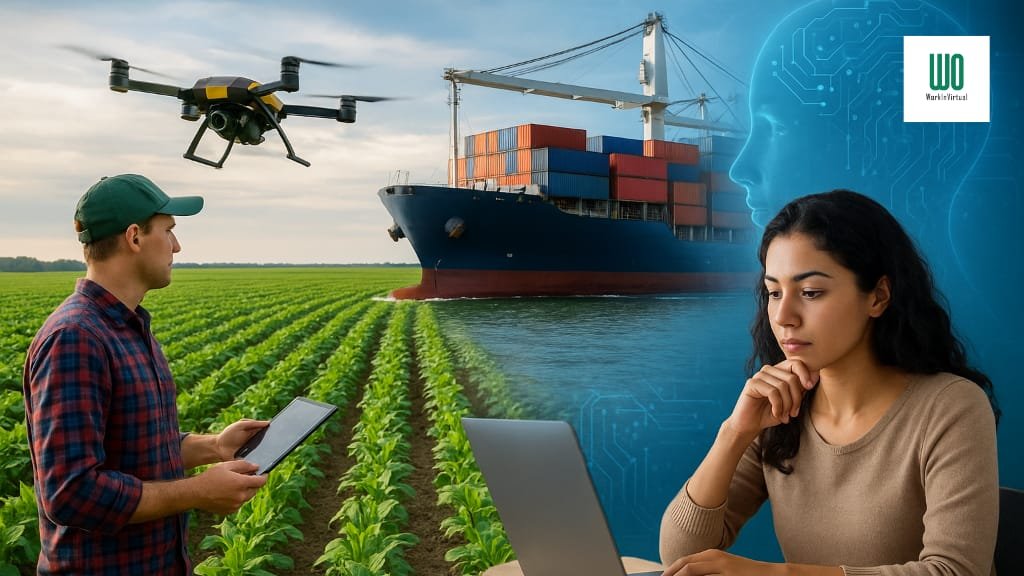
The global food and trade landscape is undergoing dramatic shifts, with technology driving innovation in farming, supply chains, and workspaces. A new wave of research reveals how digital tools, automation, and scientific breakthroughs are transforming what we eat, how it is produced, and how goods are delivered across borders.
Farming Meets High Tech
Food production is no longer just about soil and seeds. Advanced technologies are rapidly changing how farmers grow and deliver crops. A recent study revealed that next-generation herbicide solutions are helping producers cut costs by more than two-thirds. Artificial intelligence tools are already being deployed to lower food waste and improve restaurant efficiency.
The future may also see CRISPR gene editing play a bigger role in lowering production costs while enhancing crop resilience. Meanwhile, farmers are adopting online platforms to source equipment and inputs. Nearly one in three people in the United States now buys agricultural products on the internet.
Automation is another area transforming the field. From robotic harvesters to pheromone-based pest control, which has surged by over half worldwide, farmers are finding ways to overcome labor shortages and rising costs. At the same time, younger generations are shaping demand. Nearly 90 percent of millennials and Gen Z consumers say they will continue prioritizing healthy food purchases even during economic downturns.
Changing Priorities in the Workplace
The workforce side of supply chains is also evolving. A new global survey of senior HR leaders highlights shifting priorities for chief people officers. While businesses remain cautious about hiring amid economic volatility and geopolitical uncertainty, leaders see opportunities to transform the workforce in the long term.
Concerns over employee well-being are rising. Mental health pressures and cultural divisions are reshaping how employees connect with their organizations. Many executives believe that technology is amplifying these challenges, prompting companies to reinforce their shared values and team cohesion.
Artificial intelligence is becoming central to workplace operations, but leaders warn of two major risks. The first is whether employees can adapt quickly enough through upskilling. The second is managing privacy and ethical challenges as AI becomes embedded in daily workflows.
Shipping Costs Reveal Market Tensions
Global trade routes are experiencing their own turbulence. Ocean shipping rates on China to U.S. West Coast routes have seen sharp swings this year. After spiking in June, rates dropped by nearly 70 percent by early September, signaling an unusually short and early peak season.
The volatility reflects both tariff uncertainty and cautious consumer spending. Carriers are attempting to stabilize prices through rate adjustments, but analysts suggest that long-term sustainability will depend on capacity cuts. With China’s Golden Week holiday and shifting demand patterns, the coming months will test the resilience of global shipping.