

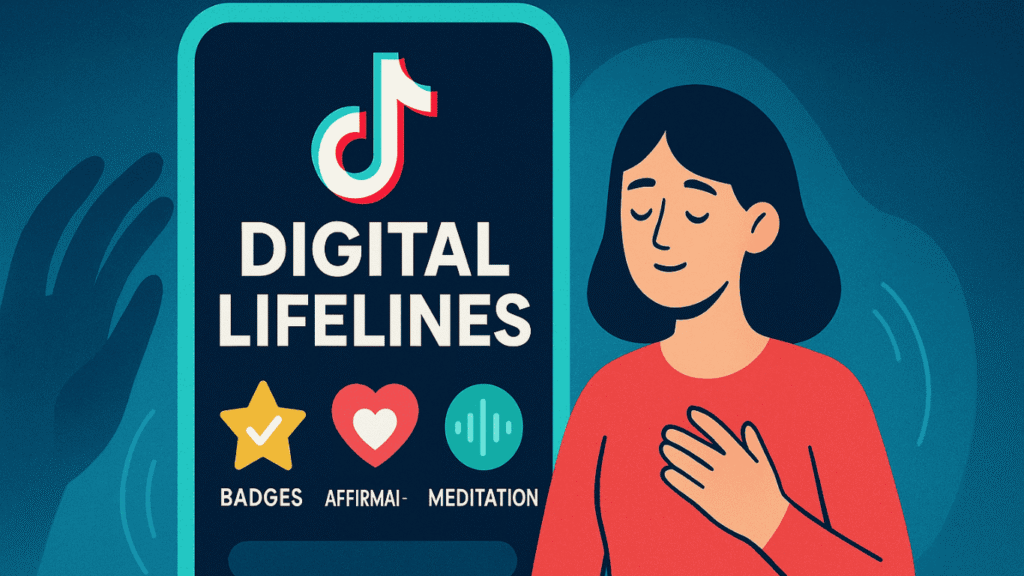
Platform Battles Doomscrolling Addiction With Badges And Affirmations
The social media giant TikTok is dramatically shifting its focus, now championing digital wellness rather than endless scrolling. It unveiled a significant redesign of its screen time management page, introducing a suite of features that move beyond simple restrictions, instead offering positive reinforcement and mental health support. This pivot addresses growing concerns about the platform’s compulsive nature, especially among its younger audience.
Also Read: Human Resource Project Intern – TikTok Shop London 2025 | Competitive Package & Perks
The Compulsion Crisis
The relentless, personalized feed drives remarkable engagement, but this design also creates serious addiction concerns. Global data showed the average user spends around 95 minutes per day on TikTok. That total is more than any other social network.
This sustained engagement, however, carries a known risk. Studies indicate that adolescents who spend over three hours daily on social media face double the risk of experiencing poor mental health outcomes, including symptoms of anxiety and depression. TikTok is clearly attempting to reconcile its business model with its users’ well-being.
Gamifying Self-Control
The most novel element of this launch is a badge system that rewards users for practicing self-control. This approach targets teenagers, as the company acknowledges overly restrictive tools can prove counterproductive for this age group. Users can earn badges by completing specific “missions.” These missions include avoiding platform use during set “sleep hours,” using the new meditation tools, or simply adhering to a self-imposed daily screen time limit. The company is cleverly gamifying the disengagement process, turning a health requirement into a desirable achievement.
New Tools For Mental Fitness
The updated wellness hub is packed with practical aids. A new Affirmation Journal offers over 120 positive prompts. It encourages users to set their daily intent actively. A sound generator provides calming ambient noises, such as rain or ocean waves, helping users disconnect from the demanding feed, whereas a breathing exercise module rounds out the initial toolkit.
The early results are promising, and the company’s preliminary tests revealed that more people actively visited the new well-being screen than the prior, less engaging screen time menu.
A Necessary Industry Shift
TikTok is not the only company responding to the youth mental health crisis. In the past month, numerous tech giants, including YouTube, Meta, and Discord, rolled out new safety tools to protect teenagers. The platform will now actively display links to its new well-being tools at crucial intervention points.
Also Read: Social Media Video Editor (Freelance) – Luxury Brand Reels & TikTok Specialist
This strategic placement aims to interrupt the compulsive scrolling cycle with a moment of conscious reflection. With the high stakes of adolescent mental health, this move represents a critical, proactive step by the platform, indicating a shift toward building healthier, more sustainable digital habits for its massive user base.
