

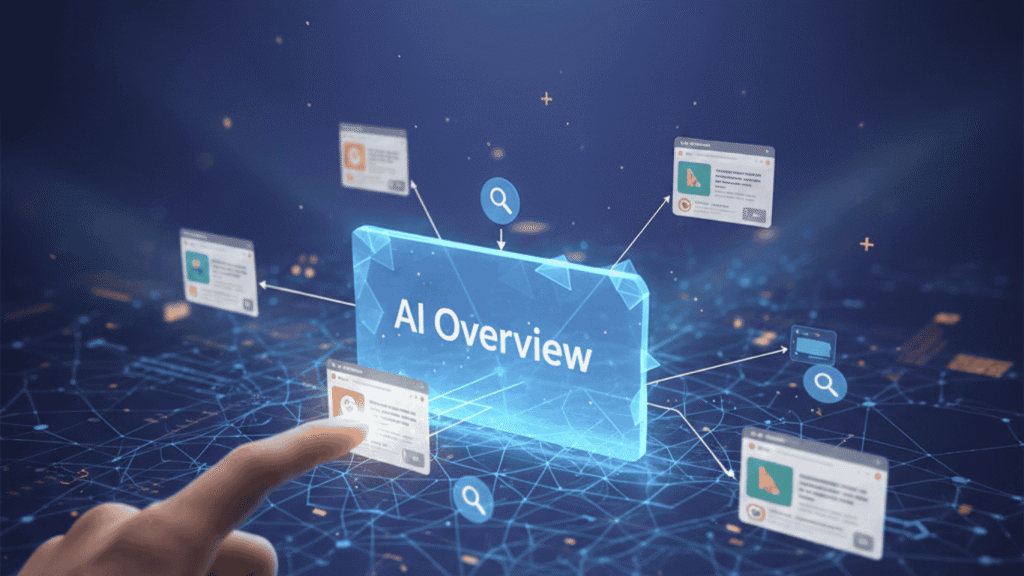
Digital creators have spent months watching their traffic vanish into the black hole of AI-generated summaries. These “zero-click” searches previously gave users the answers they needed without ever requiring a visit to the source. However, a new era of visibility is dived into by Robby Stein, Google’s VP of Product for Search, who announced that AI Overviews will now feature highly prominent, descriptive link icons.
Desktop users can now experience a hover-activated pop-up system. Instead of buried footnotes, a simple mouse movement triggers a window filled with site names, favicons, and concise descriptions. This transition aims to turn a static summary into a launchpad for deeper exploration, ensuring that the human intelligence behind the machine-generated text receives its due credit.
Also Read: Google Now Remembers Everything About You
Survival Statistics: The Cost of AI Dominance
The stakes for these design tweaks could not be higher for the global media ecosystem. When AI Overviews first expanded across the search landscape, the impact on traditional organic traffic was immediate and devastating. Data analysts observed a sharp decline in user engagement with traditional search results as the AI box took up “above the fold” real estate on mobile and desktop screens.
| Metric Impact | Before AI Expansion | After AI Expansion | Percentage Shift |
| Top Organic Click-Through Rate | 28% | 19% | 32% Decrease |
| User Interaction with AI Links | N/A | 1% of visits | Minimal Engagement |
Recent findings suggest that the struggle for visibility is an uphill battle. Only about 1 in 100 users clicked a link tucked inside an AI summary during the initial rollout phases. This startlingly low engagement rate forced Google to rethink its “North Star” strategy, leading to the current push for embedded carousels and these new, “more engaging” hover states.
A High-Stakes Game of Design
Google claims that its internal testing shows these new UI elements make it significantly easier for people to discover great content across the web. Critics, however, remain skeptical about whether a prettier link is enough to save an industry currently bleeding clicks. The company describes this as an “ongoing design challenge,” signaling that the fight for a balanced search ecosystem is far from over.
These updates represent more than just a fresh coat of paint. They are a response to a growing outcry from the publishing world, which views AI as a parasite that consumes content to train its models while simultaneously starving the creators of that content. By making links more “descriptive and prominent,” Google is attempting to prove it can be a partner rather than a predator.
Whether these hover-cards will actually translate into revenue-generating traffic for publishers remains the million-dollar question. For now, the “invisible” web is becoming a little more visible, one pop-up at a time.
