

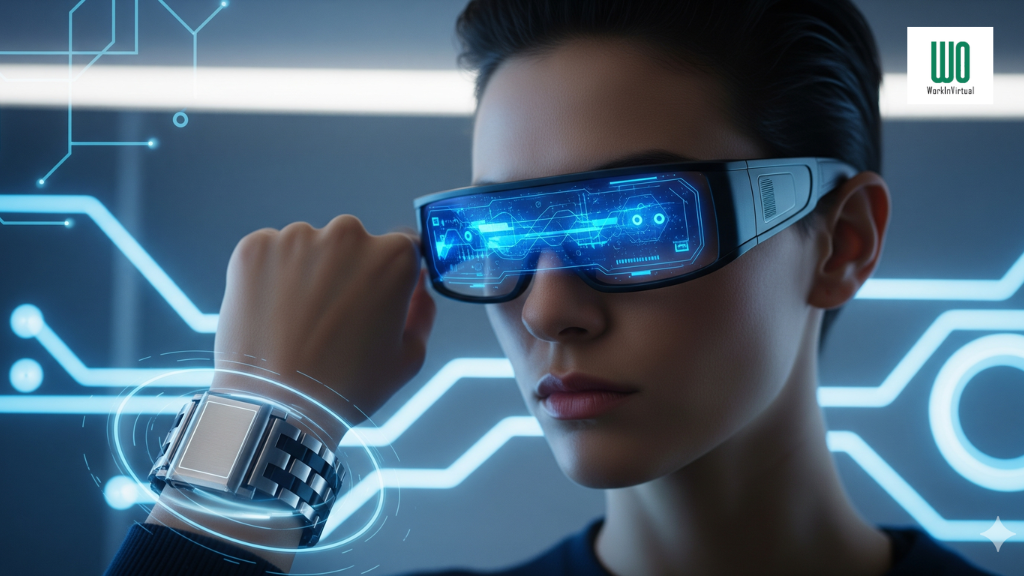
Meta bets on AI glasses, unveiling a new generation of wearables with a bold vision for the future of tech.
A Revolution on Your Face
Meta has taken a giant leap into the future of personal technology. At the “Meta Connect” conference, CEO Mark Zuckerberg unveiled a new line of smart glasses, a bold expansion of the company’s vision for AI-integrated wearables. The latest devices, created by Ray-Ban and Oakley, are designed to be a seamless part of daily life.
Introducing the Next-Gen Glasses
The star of the show is the new Meta Ray-Ban Display. These glasses feature a high-resolution, full-color screen cleverly built into one of the lenses. It’s an augmented reality experience that appears only when needed. Users can check messages, see real-time translations, and even make video calls directly from their glasses. The device also packs a powerful 12-megapixel camera.
A New Way to Control Your World
Alongside the new display glasses, Meta introduced a groundbreaking “neural wristband.” This innovative accessory uses tiny muscle signals from your hand to control the glasses. With simple hand gestures, you can navigate menus, send messages, and interact with the world around you, all without touching a screen. Zuckerberg hailed this technology as a “huge scientific breakthrough.”
The Big AI Bet
Analysts believe these smart glasses have a better chance of success than Meta’s “Metaverse” project. Unlike cumbersome VR headsets, these glasses are an everyday accessory. This makes them the perfect platform for Meta to integrate its powerful AI assistant, Meta AI, into people’s lives. However, the company faces the challenge of convincing consumers that the benefits are worth the cost, with the new Display model priced at $799.
Beyond the Glasses
The launch of the new glasses is part of a much larger strategy. Meta is currently spending heavily to bolster its AI operations. Zuckerberg has announced plans to invest hundreds of billions of dollars in building vast AI data centers. The company’s long-term goal is to develop “superintelligence,” an AI that can out-think humans. This ambitious push comes as the company continues to face scrutiny over the safety of its products, particularly for young users.