

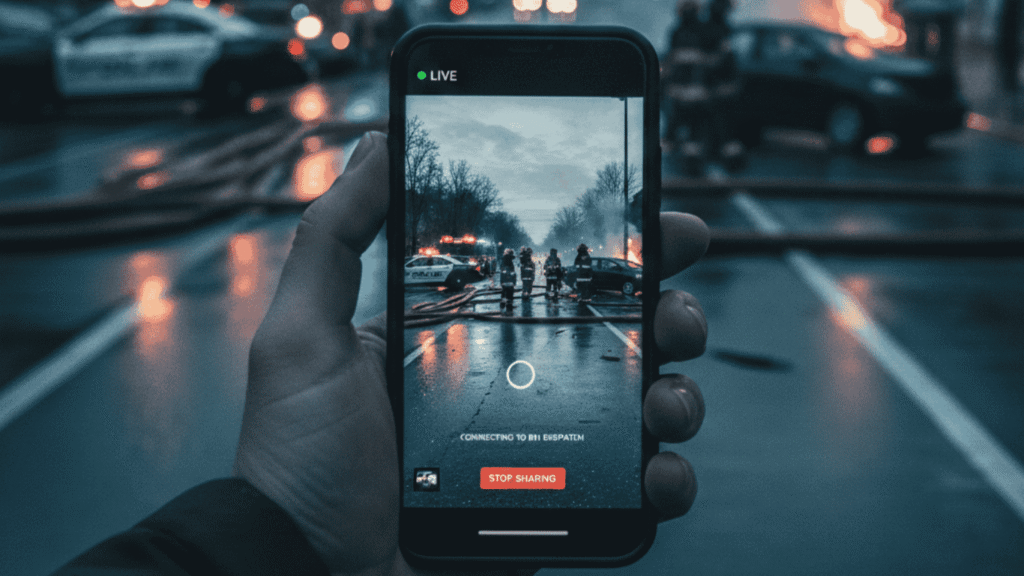
New ‘Eyes on the Scene’ Feature Could Shave Crucial Minutes, Boosting Survival Odds in Crisis Moments.
A silent revolution is sweeping through emergency response, giving millions of smartphone users a powerful new tool in life-and-death situations. Google has launched Android Emergency Live Video, a transformative feature that enables citizens to stream real-time video directly to 911 dispatchers securely. This monumental step moves emergency calls beyond voice alone, providing critical, immediate visual context during intense crises like car crashes, house fires, or sudden medical episodes.
The technology’s introduction is surprisingly straightforward, designed for deployment in stressful moments. No prior setup or app download is necessary. Instead, if a caller contacts emergency services, the dispatcher can quickly assess whether visual information is needed. The dispatcher then sends a request to the user’s device, which appears as a simple, one-tap prompt. Consent remains entirely with the user, who can initiate the encrypted video stream at any time. Crucially, the ability to stop sharing is always present on the screen, ensuring privacy and control are maintained.
Dispatchers can use the real-time feed to observe the scene, gauge the severity of injuries, and immediately determine the necessary level of response, such as sending specialized teams or guiding life-saving actions. For instance, a dispatcher can walk a terrified bystander through the precise steps of performing Cardiopulmonary Resuscitation (CPR) while watching their actions.
Also Read: Microsoft Introduces Open-Source AI Army to Power the Future
The Critical Role of Visual Context
In high-stakes emergencies, time is an adversary. Every minute wasted due to poor communication or a misjudged situation exponentially lowers the chance of a positive outcome. Studies highlight the dramatic impact of immediate intervention. For every minute that essential actions like CPR or defibrillation are delayed, a person’s chance of surviving a cardiac arrest decreases by up to 10 percent. This stark reality underscores why a faster, more accurate initial assessment by emergency services can fundamentally alter the course of an emergency.
Moreover, a dispatcher’s ability to see the event can significantly refine the triage process. Research analyzing the use of video streaming during emergency medical calls shows the visual context is highly effective, with dispatchers modifying their initial assessment of a patient’s condition in more than half of cases after gaining visual insight. This level of accuracy ensures that the right resources are deployed immediately, preventing crucial delays in treatment.
Wider Impact and Rollout
The new Emergency Live Video capability is integrated into Android, extending its reach to devices running Android 8 and later. While a fundamental shift, the rollout will be measured and geographically phased. The feature will initially be available to Android users across the United States, as well as in specific regions of Germany and Mexico. This limited but powerful launch enables emergency services to integrate the new data stream seamlessly.
This move by Google places it alongside other technology giants, like Apple, which have steadily expanded mobile device safety features, including fall detection, crash detection, and satellite communication for remote emergencies. The new video capability transforms the standard emergency call from a fragmented, verbal exchange into a unified, visual stream of essential information. Ultimately, this integration of sight with sound promises to shorten response times, reduce resource misallocation, and, most importantly, save lives by bridging the critical information gap during a crisis.
