

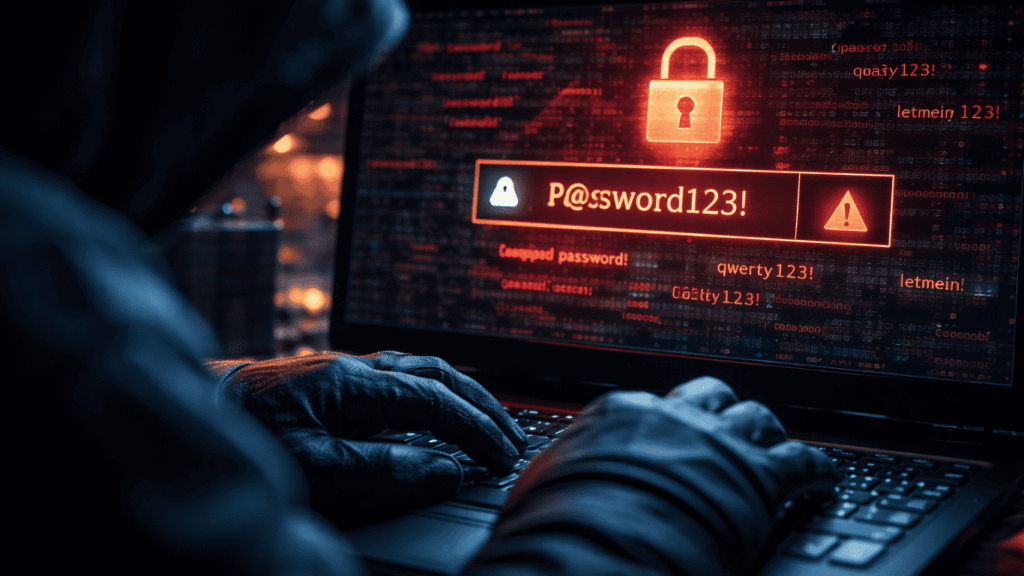
Your habit of adding a ‘1’ or a ‘!’ to an old password is creating a gold mine for cybercriminals, leaving the front door to your digital life wide open.
Can you recall the last time you truly created a unique password from scratch? For millions of users, the answer is a resounding no. Instead of engineering complex barriers, the modern internet user has fallen into a trap of “near-identical” reuse. It feels safe, but acts as a welcome mat for global threat actors. This pattern of behavior has evolved into a systemic vulnerability that simultaneously puts corporate empires and personal savings at risk.
The Psychology of the Lazy Login
Why do we continue to gamble with our digital identities? Human memory is simply not built to house the nearly 170 unique credentials the average person now requires to navigate daily life. Consequently, people resort to “versioning.” You take a base word, perhaps a pet’s name or a favorite sports team, and simply tack on a year or a special character. To you, it feels like a fresh update. To a brute-force algorithm, it represents a predictable pattern that can be cracked in milliseconds.
Also Read: Teams Security SHOCKWAVE: Microsoft Enforces Default Guardrails to Crush Cyber Threats
Recent data highlight a staggering lack of discipline worldwide. In the United States, roughly 62% of the workforce admits to recycling credentials across multiple platforms. The situation remains equally dire across the Atlantic, with 60% of UK employees and half of the German workforce confessing to the same dangerous shortcut. These are not just numbers; they represent millions of entry points for ransomware and identity theft.
By the Numbers: The Scale of the Crisis
| Region | Worker Password Reuse Rate |
| United States | 62% |
| United Kingdom | 60% |
| Germany | 50% |
| Global Average Reuse | 5 accounts per user |
The Dark Web’s Favorite Tweaks
Cybersecurity researchers recently audited the most common passwords circulating on the dark web, discovering a disturbing trend toward “predictable evolution.” Out of the top 200 most frequently leaked passwords, over half were minor variations of one another. Hackers specifically target seven “deadly” groups of variations:
- Sequential Steps: Simple strings like “123456” or “987654.”
- The Admin Trap: Variations of “admin,” “Admin123,” or “adminadmin.”
- Keyboard Cascades: Patterns like “qwerty” or “asdfgh.”
- The Welcome Mat: Common words such as “Password!” or “Welcome2025.”
Criminals use credential stuffing, a technique in which they take a leaked password and automatically test thousands of slight variations against your other accounts. If they find “Pizza123” on a leaked food delivery app, they will instantly try “Pizza124” on your primary banking login.
Dismantling the Illusion of Safety
How do we break this cycle of vulnerability? Experts suggest that relying on human memory is the first mistake. Moving toward a “Zero Trust” personal security model is essential.
- Embrace the Manager: Use a dedicated password manager to generate and store high-entropy, random strings.
- Activate MFA: Multi-factor authentication acts as a physical deadbolt, even if a hacker has your “tweaked” password.
- The Passkey Revolution: Transition to biometric passkeys, which eliminate the need for typed characters.
This digital crisis thrives on the friction between convenience and security. Until users accept that a “slightly different” password is no password at all, the dark web will continue to feast on our desire for simplicity.
