

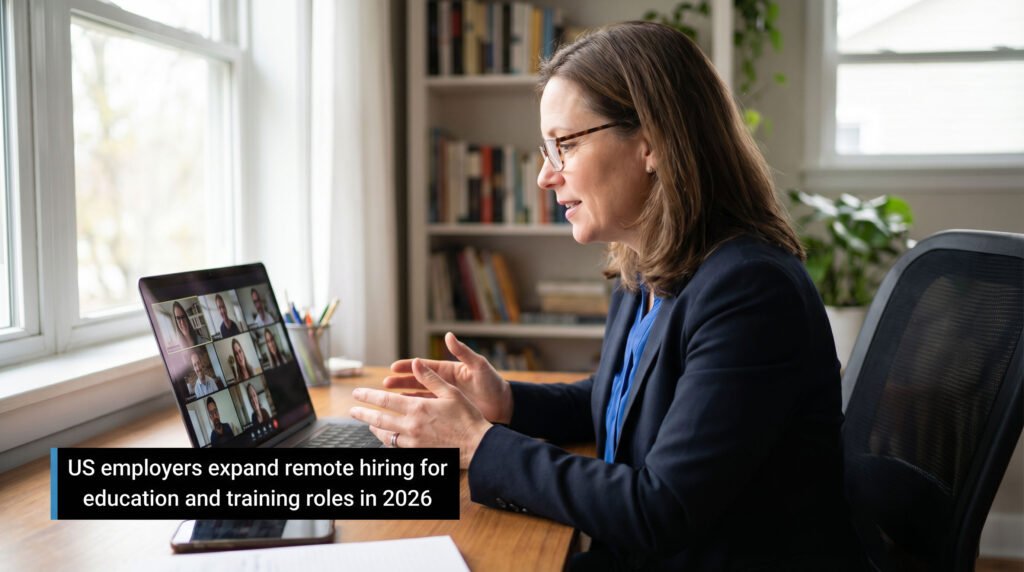
Remote education and training careers include instructional design, curriculum work, virtual facilitation, learning-system administration, enablement and learner support. Strong candidates connect a verified learner need to measurable objectives, accessible materials, practice, feedback and evaluation. Teaching or regulated programs may require credentials and location-specific authorization. Build a short accessible learning module with a design rationale and outcome plan, then verify the employer, audience, schedule, jurisdiction and official application route.
Show a visible last verified date. Separate durable guidance from volatile vacancy status, employer, job ID, location, work mode, schedule, pay, benefits and deadline. Reopen each volatile field on its exact official source on publication day. WorkinVirtual is an independent information service; it does not receive applications, represent an employer or guarantee employment, pay, legal status, ranking or career results.
Decision and retained evidence
Before release, obtain at least 16 months of GSC page/query data and page-level GA4 reporting. Audit backlinks, referring domains, internal links, citations and saves. Content gap: The legacy page asserts online-learning demand without proving openings. It lacks learner analysis, accessible materials, outcome evaluation, credential boundaries, synchronous schedules, LMS evidence and verified application routes.
The evidence-backed proposal is rebuild, preserving owner 103375. Analytics, current official evidence, specialist review and owner approval may still change it.
What readers need to know
BLS says instructional coordinators develop curriculum, train educators and assess effectiveness; many school-based roles require advanced education and related experience.
Training and development specialists design or deliver workplace learning, but title, audience and credential requirements vary by employer and industry.
Section508.gov provides official U.S. federal guidance for accessible documents, presentations, media, meetings and digital products.
W3C WCAG 2.2 is a current accessibility standard for web content; automated checks alone do not prove an accessible learning experience.
Relevant roles or stakeholders include instructional designer, training and development specialist, curriculum or learning-content specialist, virtual facilitator, learning management system administrator, customer or employee enablement specialist. These examples support navigation; they do not prove a vacancy, credential or legal authority. The exact employer notice, government source, licensing authority and jurisdiction control. Avoid latest, best, guaranteed, high-paying and now hiring unless narrowly sourced and date-bounded.
Application and decision steps
- Choose an audience and role family, then compare official occupation guidance and verified employer postings.
- Define the performance problem and evidence before deciding that a course is the solution.
- Write measurable objectives and align content, practice, feedback and assessment to each objective.
- Build a short module with headings, keyboard access, captions or transcripts, alt text, readable contrast and plain language.
- Create an evaluation plan separating attendance, satisfaction, learning, application and organizational outcome.
- Verify teaching credentials, jurisdiction, work location, synchronous schedule, travel, data systems and official job ID.
- Publish only permitted work; remove learner records, assessment results, internal policy and copyrighted employer material.
Start each application from the verified official domain. Record the legal entity, job ID, final destination, work location, schedule and evidence date. Do not rely on a copied form, paid-access page, recruiter message or stale aggregator when the official source differs. Recheck the posting before every interview.
Skills and evidence
Priority evidence includes learner and task analysis, measurable objective writing, accessible content and media, facilitation and feedback, learning-system operations, evaluation and evidence interpretation. Present claims as requirement → context → action → measurable result → proof, defining the metric, denominator, time period and personal versus team contribution. Use public, synthetic or explicitly permitted material. Never invent employment, credentials, licenses, clearance, pay, results or selection probability, and never expose customer, patient, employee, source-code, legal, security or commercial secrets.
A strong portfolio states the problem, inputs, constraints, alternatives, decision, test, outcome, limitations and what changed. A weak portfolio is a tool list, unexplained percentage, employer screenshot or artifact the reviewer cannot safely inspect.
Engagement design
Add a learning-objective checker, accessible-module checklist and evaluation-plan worksheet. It should reveal alignment gaps, not guarantee learning outcomes or accessibility conformance.
Useful next actions include opening an official source, completing a checklist, saving a role, tailoring a resume, practicing an interview or recording a verification date. Instrument only after consent and analytics governance. Avoid fake countdowns, live-looking vacancy counts, forced registration, dark patterns and tools that predict hiring, income, compliance, legal status or health outcomes.
Verification, privacy and safety
Remove stale availability, urgency, compensation, benefits and trend claims unless a current exact source supports them. Match recruiter domain, job ID, legal entity and application destination. Reject fees, cryptocurrency, gift cards, fake checks, equipment purchases and messaging-only recruitment. FTC job-scam guidance provides general warning signs, but the verified employer route controls.
Minimize personal data, use least privilege, document retention and protect confidential evidence. Current official sources override this draft. Employment, licensing, tax, privacy, security, accessibility or compensation claims need qualified review when they cross into regulated advice.
FAQ
Do I need a teaching license?
It depends on the role and jurisdiction. Corporate training and instructional design may differ from licensed classroom teaching.
What belongs in an instructional-design portfolio?
Show the learner need, objectives, design choices, accessible artifact, practice, feedback, evaluation plan and limitations.
Is passing an automated accessibility test enough?
No. Automated tools catch only some issues. Include manual, keyboard, screen-reader and user testing appropriate to the product.
Can remote training be asynchronous?
Some can, but facilitation, coaching and cohort roles may require fixed sessions and time-zone overlap.
Official and primary sources
- BLS: Instructional Coordinators — https://www.bls.gov/ooh/education-training-and-library/instructional-coordinators.htm
- BLS: Training and Development Specialists — https://www.bls.gov/ooh/business-and-financial/training-and-development-specialists.htm
- Section508.gov: Create Accessible Digital Products — https://www.section508.gov/create/
- Section508.gov: Accessibility Training — https://www.section508.gov/training-home/
- W3C WAI: WCAG 2 Overview — https://www.w3.org/WAI/standards-guidelines/wcag/
- FTC: Job scams — https://consumer.ftc.gov/articles/job-scams
These official and primary sources establish occupational patterns, public guidance, technical standards or regulatory context. They do not prove a legacy vacancy is open or a tactic guarantees results. Reopen and date-stamp each source on release day; remove claims it no longer supports.
Choose your next step
Keep your momentum with practical tools and verified remote-work opportunities.
Related guides for your next step
A fresh, topic-aware mix from the WorkinVirtual library. Suggestions rotate regularly.




Discuss this guide
Ask a useful question, share relevant experience, or add a practical correction. Helpful contributions publish immediately after automated safety checks.
Start a thoughtful discussion
Be the first member to add a question or practical insight about this topic.
Join the discussion
Sign in with your verified WorkinVirtual account to contribute. Automated safety checks keep posting quick and protect the community.
Sign in to contribute