

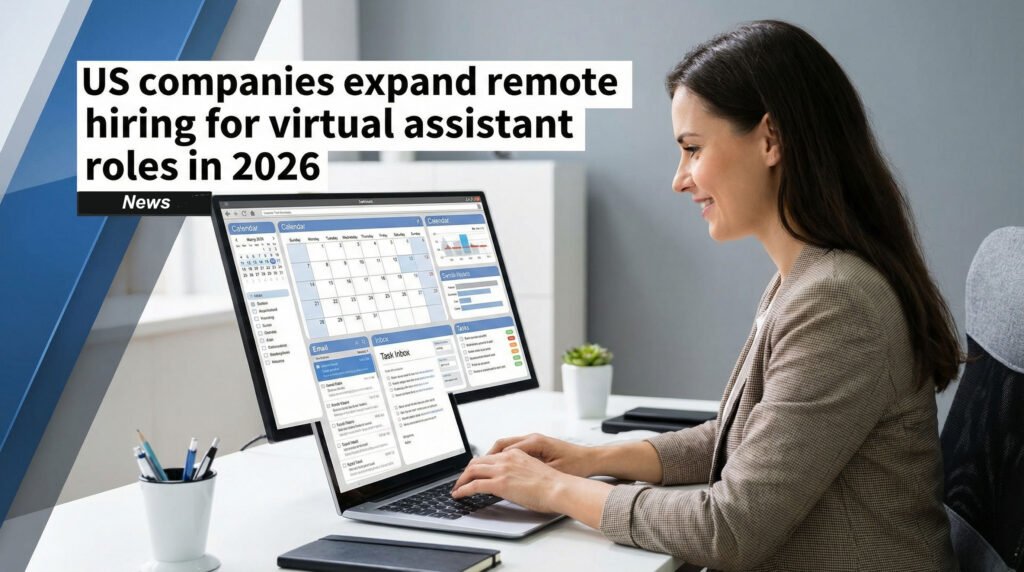
Virtual-assistant work in the United States covers remote administrative, executive, customer and operations support delivered as an employee, agency worker or independent contractor. The strongest entry strategy is to choose one service area, build evidence with realistic sample work, verify employment terms and search both “virtual assistant” and established administrative job titles. Remote availability and income are not guaranteed.
Understand the three work models
An employee works for one organization under its policies, schedule and benefits structure. A staffing or virtual-assistant agency may place workers with clients or employ assistants directly. An independent contractor operates a business, manages taxes and tools, and controls work subject to the actual relationship and law—not merely the label in an agreement.
Classification matters. The IRS explains that the degree of control and independence helps determine whether someone is an employee or contractor. Candidates should ask who sets hours, provides equipment, directs the process, owns client relationships and pays employment taxes. If the reality conflicts with the label, seek qualified advice rather than relying on a job ad.
Choose a service lane
General administration includes inboxes, calendars, documents, travel and data maintenance. Executive support adds prioritization, meeting preparation and confidential coordination. Customer operations can include tickets, order issues and appointment handling. Marketing support can include content scheduling and basic reporting. Specialized lanes include bookkeeping support, recruiting coordination, real estate administration and medical-office support.
Choose a lane based on existing evidence, not a fashionable tool. A hospitality worker may already have scheduling and service proof. A project coordinator may fit operations support. A bookkeeper needs appropriate financial controls and should not offer regulated advice outside their competence.
Build a one-week evidence portfolio
On day one, write a fictional client brief with working hours, priorities and privacy rules. On day two, create a clean weekly calendar across two time zones. On day three, draft an inbox triage rule set and three sample replies. On day four, build a task tracker with owner, due date and status. On day five, prepare a one-page weekly operations report.
Use invented information only. On day six, review every artifact for accessibility, clarity and confidentiality. On day seven, publish a short portfolio page explaining the problem, your process and the result. Do not upload client work or personal data without permission.
This sprint creates observable proof. Employers can assess whether you communicate clearly, organize work and recognize risk—qualities that a generic “proficient in office software” line does not demonstrate.
Search using established job families
Search virtual assistant, remote administrative assistant, executive assistant, operations coordinator, scheduling coordinator, customer support coordinator and recruiting coordinator. Use official employer career pages and reputable applicant systems. Some opportunities are posted through staffing firms; verify the agency’s real website, address and relationship to the client.
Read geography carefully. “U.S. remote” may still restrict eligible states because of payroll, tax or business requirements. Confirm schedule, time zone, employee or contractor status, pay unit, equipment, phone duties and travel. Avoid interpreting a search snippet as the full employment offer.
Adapt to automation responsibly
BLS notes that technology and AI allow organizations to automate or redistribute some administrative tasks. That does not eliminate the need for judgment, but it changes the value proposition. Build strength in exception handling, stakeholder communication, process improvement and careful use of approved tools.
When using AI, protect confidential data, verify outputs and document human review. A good candidate can explain which tasks are safe to automate, which require permission and which demand personal judgment. Do not claim an AI tool completed work you did not inspect.
Application process: apply with a proof-first resume
Lead with the service lane and results: calendars coordinated, requests resolved, records improved or response time reduced. Translate non-office experience into relevant outcomes without changing the facts. Link two or three portfolio artifacts and explain your contribution.
In an interview, ask what success looks like in 30 days, which systems are authoritative, what information is sensitive and how priorities are escalated. These questions reveal whether the organization has a workable remote operating model.
Verify every opportunity
The FTC warns that fake remote jobs can involve checks, equipment purchases, fees and requests for sensitive information. Confirm the role through the company’s official domain. Be cautious with unsolicited messages, interviews conducted only through chat, unrealistic pay and pressure to act immediately. Never send money to receive wages or unlock tasks.
FAQ
Is virtual assistance a standardized U.S. occupation?
No. It overlaps administrative, executive, customer and operations occupations, so duties and employment models vary widely.
Do virtual assistants need a degree?
Many administrative roles emphasize skills and experience, but specialized or senior positions may require education, industry knowledge or certifications.
Should a beginner freelance or seek employment?
Either can work. Employment may provide clearer systems and supervision; freelancing adds business, tax, sales and client-management responsibilities.
Internal-link recommendations
- Link to WorkinVirtual’s virtual-assistant resume builder after the portfolio sprint.
- Link to the scheduling-assistant guide in the service-lane section.
- Link to the job-scam verification guide before the FAQ.
Choose your next step
Keep your momentum with practical tools and verified remote-work opportunities.
Related guides for your next step
A fresh, topic-aware mix from the WorkinVirtual library. Suggestions rotate regularly.




Discuss this guide
Ask a useful question, share relevant experience, or add a practical correction. Helpful contributions publish immediately after automated safety checks.
Start a thoughtful discussion
Be the first member to add a question or practical insight about this topic.
Join the discussion
Sign in with your verified WorkinVirtual account to contribute. Automated safety checks keep posting quick and protect the community.
Sign in to contribute