

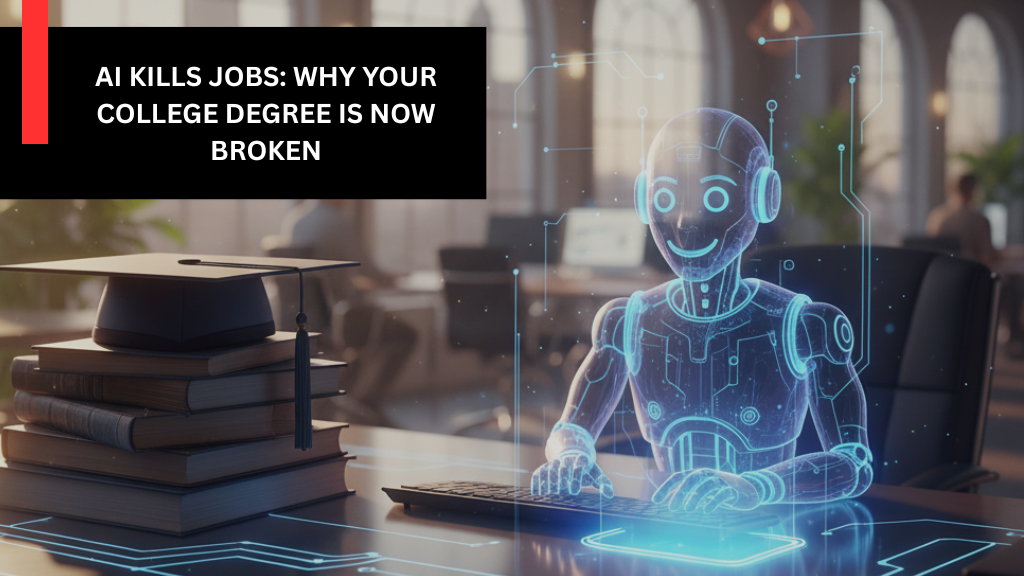
AI exposure does not equal automatic job elimination, and a degree is not ‘broken.’ Current international evidence points more often to task transformation than wholesale replacement, with uneven effects by occupation, country and access to digital infrastructure. Entry-level candidates should map changing tasks, strengthen domain and verification skills, build permitted work samples, learn responsible AI use and keep multiple pathways open.
This article must display a visible last verified date. Durable guidance must be separated from volatile facts such as a vacancy, deadline, location, work model, contract, eligibility, compensation, benefits or application method. Every volatile field must be checked against its exact official source on publication day. WorkinVirtual is independent and does not receive applications, represent the named employer or guarantee an outcome.
Decision and retained evidence
Before any release decision, export at least 16 months of GSC page/query data and page-level GA4 landing-page, engagement, official-source-click, tool-start, conversion and assisted-journey data. Audit backlinks, referring domains, internal links, citations and saves. Content gap: The 443-word legacy page collapses task exposure, adoption, productivity and job loss into a sensational verdict. It lacks occupational nuance, source scope, country differences, employer evidence, responsible AI use, privacy and a concrete portfolio pathway.
The Phase 1 disposition is rebuild. It remains an editorial proposal. Analytics, backlink evidence, current official sources, legal or specialist review, destination completeness and owner approval may change it.
What readers need to know
The ILO–NASK 2025 index assessed task-level exposure and stressed that exposure is not observed job loss; transformation was the more likely broad outcome. A 2026 ILO–World Bank study further emphasized uneven effects across countries because digital infrastructure and task composition differ. BLS Employment Projections and the Occupational Outlook Handbook provide U.S. occupational outlook, duties, education and wage context, while O*NET describes tasks and skills. Use these sources together without claiming they predict an individual outcome. For any target occupation, list recurring tasks and classify them as human-led, AI-assisted, automatable under supervision, or high-consequence and verification-heavy. Then inspect current employer postings for evidence of changed tools and expectations. Build a portfolio that demonstrates problem framing, domain judgment, source verification, data handling, communication and review—not merely prompt output. Degrees, apprenticeships, certifications and experience are different evidence channels; their value depends on occupation and employer.
Relevant roles or stakeholders include student, recent graduate, apprentice, career changer, hiring manager, educator, workforce-development adviser, analyst, support specialist and junior technologist. These are navigation and planning examples, not evidence of current openings or legal requirements. The exact official notice, policy or regulator controls. Avoid “latest,” “best,” “high-paying,” “lucrative,” “guaranteed” and “now hiring” unless the wording is narrowly sourced and time-bounded.
Application steps
- Choose one occupation and read its current BLS OOH or national official profile plus O*NET task information.
- List 15–25 recurring tasks from official profiles and current employer postings; distinguish exposure from actual adoption or displacement.
- Mark where human judgment, accountability, confidentiality, customer context, physical presence or licensure remains important.
- Learn one approved AI-assisted workflow and its failure modes; document inputs, checks, corrections, decision boundaries and final human responsibility.
- Build two permitted work samples: one without AI to prove fundamentals and one with transparent AI assistance and rigorous verification.
- Collect feedback from practitioners, interviews and applications; update the skill map rather than chasing every tool announcement.
- Maintain multiple entry routes—internship, apprenticeship, contract project, adjacent role or further study—and compare cost, evidence and opportunity.
- Never upload employer, client, student or personal confidential data to an AI service without authorization.
For applications, always use the verified official route and exact requisition. For operational guidance, document owners, definitions, denominators, review cadence and escalation. Never substitute a scraped form, paid access, opaque scoring or surveillance for a legitimate decision process.
Skills and evidence
Priority evidence includes task analysis, domain knowledge, source verification, data literacy, responsible AI use, privacy, quality assurance, communication, portfolio design and labor-market research. Present evidence as requirement → context → action → measurable result → proof, clearly separating personal contribution from team outcomes. Use synthetic, public or explicitly permitted portfolio examples. Do not invent credentials, employment, salary, license, clearance, language fluency, results or selection probability. Never expose customer, patient, employee, source-code, security or commercially confidential data.
Engagement design
Offer a task-exposure worksheet with four columns—task, current evidence, possible AI assistance, human verification—and a portfolio-plan exporter. It must not produce a layoff probability, salary prediction or employability score.
Useful next actions may include opening an official source, completing a checklist, saving a role, tailoring a resume, practicing an interview, comparing a metric definition or recording a review action. Instrument only after consent and analytics governance. Do not use fake countdowns, auto-refreshing vacancy counts, forced registration, dark patterns or a quiz that predicts hiring or business success.
Verification, privacy and safety
Do not advise users to conceal AI use, violate assessment rules or upload confidential data. Avoid mental-health or financial certainty. Country, occupation and employer conditions differ, and labor studies describe populations rather than predicting an individual career. Clearly date all projections and label scenarios.
For employment content, match the recruiter domain, requisition, legal entity and final application destination. Reject fees, cryptocurrency, fake checks and messaging-only recruitment. The FTC job-scam guide at https://consumer.ftc.gov/articles/job-scams supplies general warning signs, but the current employer route controls. For business guidance, minimize personal data, restrict access, document retention and use aggregate reporting where possible.
WorkinVirtual must show author and reviewer ownership, an independent-site disclosure, a correction path and a dated maintenance record. When a current official source conflicts with this draft or a third-party page, the current official source controls. High-risk legal, employment, privacy, security or health claims need a qualified reviewer.
FAQ
Will AI eliminate entry-level jobs?
Some tasks and roles may shrink or change, but exposure is not the same as observed job loss. Effects vary by occupation, employer and country.
Is a university degree useless now?
No universal claim is justified. Degree value depends on occupation, curriculum, cost, employer requirements and the practical evidence a candidate can show.
What skills remain useful?
Domain judgment, verification, communication, data handling, privacy, quality assurance and accountable decision-making remain valuable across many roles.
Should I use AI in a portfolio?
Only when permitted. Disclose how it was used, protect data, show your checks and include work that proves fundamentals without automated assistance.
How often should I update my plan?
Review official occupational data and a sample of current employer postings quarterly or when the target role changes materially.
Official and primary sources
- ILO — Generative AI and Jobs: 2025 refined global index — https://www.ilo.org/resource/news/one-four-jobs-risk-being-transformed-genai-new-ilo%E2%80%93nask-global-index-shows
- ILO — Generative AI at work — https://www.ilo.org/resource/article/generative-ai-work-what-it-means-jobs-europe-and-beyond
- ILO — Uneven global impact of generative AI — https://www.ilo.org/resource/news/new-ilo%E2%80%93world-bank-paper-highlights-uneven-global-impact-generative-ai-jobs
- BLS — Employment Projections — https://www.bls.gov/emp/
- O*NET Online — https://www.onetonline.org/
- NIST — AI Risk Management Framework — https://www.nist.gov/itl/ai-risk-management-framework
These sources establish the entity, current verification route, measurement model or regulatory context. They do not by themselves prove a legacy vacancy remains open or a tactic guarantees results. Reopen and date-stamp evidence on release day; remove any claim a source no longer supports.
Choose your next step
Keep your momentum with practical tools and verified remote-work opportunities.
Related guides for your next step
A fresh, topic-aware mix from the WorkinVirtual library. Suggestions rotate regularly.

Discuss this guide
Ask a useful question, share relevant experience, or add a practical correction. Helpful contributions publish immediately after automated safety checks.
Start a thoughtful discussion
Be the first member to add a question or practical insight about this topic.
Join the discussion
Sign in with your verified WorkinVirtual account to contribute. Automated safety checks keep posting quick and protect the community.
Sign in to contribute