

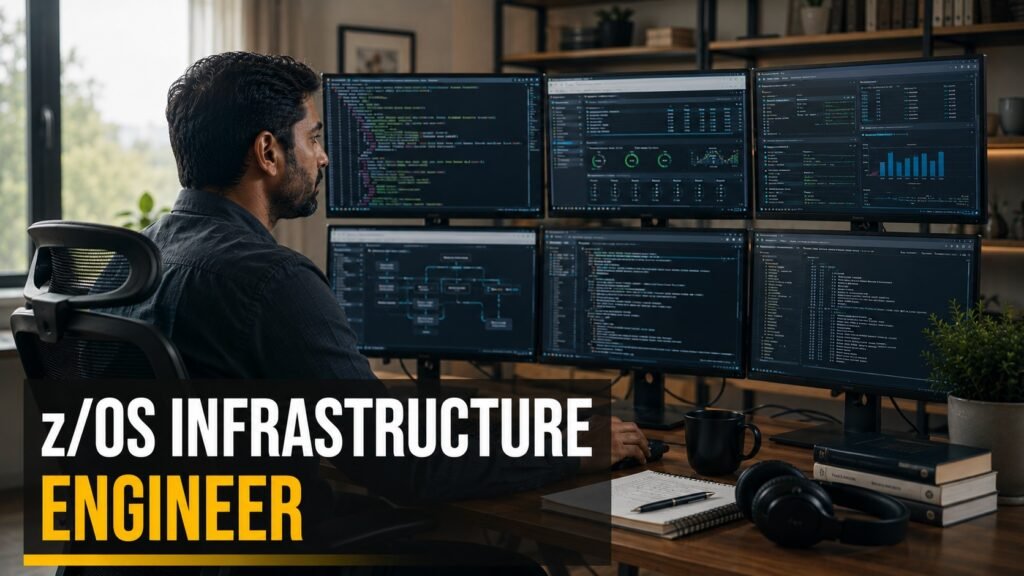
A Senior Infrastructure Engineer career focused on z/OS and mainframe print technologies can be a strong path for experienced mainframe professionals who enjoy reliability, systems engineering, print infrastructure, archive tools, automation, and business-critical platform support. This guide rebuilds a previously advertised Unum opportunity into an evergreen career resource for job seekers considering similar mainframe infrastructure roles.
Role Snapshot
What This Career Does
A Senior Infrastructure Engineer with z/OS print expertise supports the mainframe systems and print-related technologies that many large organizations still depend on for business-critical operations.
In an employee benefits or insurance environment like Unum, this work may support high-volume documents, print workflows, archive systems, policy communications, claims materials, customer notices, compliance documents, and internal business processes.
This role is not outdated. Many large companies continue to rely on mainframe systems because they are stable, scalable, secure, and deeply connected to core business operations. That makes experienced z/OS professionals valuable, especially when they also understand print technologies and modernization work.
Typical Daily Responsibilities
- Installing, configuring, and maintaining IBM and third-party z/OS software
- Supporting print-related products, archive tools, and document output systems
- Troubleshooting production issues that affect business-critical print or mainframe workflows
- Working with z/OS components such as JES2, TSO, DB2, CICS, VTAM, RACF, and SMP/E
- Supporting capacity planning, reliability, availability, and disaster recovery initiatives
- Evaluating new mainframe software products or infrastructure improvements
- Mentoring technical team members and sharing mainframe knowledge
- Communicating clearly with both technical teams and business users
Skills Employers Usually Want
- Strong z/OS operating system experience
- Mainframe print and archive tool knowledge
- JCL and REXX proficiency
- Experience with SMP/E, JES2, TSO/ISPF, SDSF, SMF, WLM, RACF, TCP/IP, VTAM, or WebSphere MQ
- Understanding of enterprise server technology and systems reliability
- Experience with OEM product installation and management
- Disaster recovery and capacity planning awareness
- Strong troubleshooting, documentation, and communication skills
Helpful Qualifications
A degree in information technology, computer science, systems engineering, or a related field may help, but many mainframe infrastructure careers are built through hands-on experience. For senior roles, employers usually care most about proven z/OS knowledge, production support experience, reliability judgment, and the ability to solve problems without disrupting business operations.
Experience with print and archive tools such as VPS, CA-VIEW, Mobius, Document Direct, Content Cloud, CA-SPOOL, or similar systems can strengthen a candidate’s profile.
Salary Expectations
The previously advertised Unum opportunity referenced a salary range of about $89,400 to $183,500. Similar senior mainframe infrastructure roles can vary based on employer size, location, remote eligibility, depth of z/OS expertise, production responsibility, and the complexity of print or archive systems.
Candidates with deep z/OS experience, print technology knowledge, RACF security understanding, disaster recovery exposure, and strong troubleshooting ability may be more competitive for higher salary ranges.
Career Growth
This career can lead toward roles such as Lead Mainframe Engineer, z/OS Systems Programmer, Mainframe Infrastructure Architect, Enterprise Systems Manager, Mainframe Operations Lead, Infrastructure Engineering Manager, or Mainframe Modernization Consultant.
The strongest long-term growth usually comes from combining legacy platform knowledge with modernization thinking. Employers value professionals who can keep critical systems stable while helping teams improve automation, documentation, resilience, and integration with newer technologies.
Who This Career Is Best For
This role may be a good fit if you enjoy deep systems work, production reliability, mainframe troubleshooting, structured environments, and supporting technology that the business depends on every day.
It may not be the best fit if you prefer front-end development, fast-changing consumer apps, or roles with limited operational responsibility. Mainframe infrastructure work requires patience, precision, accountability, and strong attention to risk.
Resume Advice
Your resume should show more than a list of mainframe tools. Employers need to see how your work improved reliability, reduced downtime, supported business-critical workflows, or modernized infrastructure processes.
- Highlight z/OS administration, systems programming, or infrastructure engineering experience
- Mention print tools, archive platforms, JES2, JCL, REXX, RACF, SMP/E, and related technologies where relevant
- Show experience supporting 24/7 production environments
- Include disaster recovery, capacity planning, monitoring, or performance improvement examples
- Use measurable results where possible, such as reduced incidents, improved uptime, faster recovery, or successful product migrations
Before You Apply
If your resume does not clearly show z/OS expertise, mainframe print experience, production reliability, troubleshooting, and business-critical impact, improve it before applying.
Use the Resume Improvement AdvisorInterview Advice
For senior z/OS infrastructure roles, interviewers usually want to understand how you troubleshoot under pressure, protect reliability, and work with both technical and business teams.
Prepare examples that show:
- How you resolved a difficult z/OS or print infrastructure issue
- How you supported a high-availability production environment
- How you installed or upgraded IBM or third-party mainframe software
- How you handled disaster recovery planning or testing
- How you improved documentation, monitoring, or team knowledge sharing
- How you communicated a technical issue to business stakeholders
How To Find Similar Jobs
Search for job titles such as:
- Senior Infrastructure Engineer z/OS
- z/OS Systems Programmer
- Mainframe Infrastructure Engineer
- Mainframe Print Engineer
- Mainframe Systems Engineer
- Enterprise Systems Programmer
- Mainframe Operations Engineer
You can also browse current opportunities through the WorkinVirtual remote jobs board and explore more employers through the Companies Hiring Remote Workers hub.
Official Unum Careers Link
For current Unum openings, always apply through the official Unum careers website.
Editorial Note: This article is based on a previously advertised Unum Senior Infrastructure Engineer opportunity focused on z/OS and print technologies. The original vacancy may no longer be open. WorkinVirtual has rebuilt this page as an evergreen career guide to help job seekers understand similar mainframe infrastructure careers, expected skills, salary considerations, resume preparation, interview planning, and where to apply. Always verify current openings, requirements, compensation, benefits, and remote eligibility on the official Unum careers page before applying.
Discuss this guide
Ask a useful question, share relevant experience, or add a practical correction. Helpful contributions publish immediately after automated safety checks.
Start a thoughtful discussion
Be the first member to add a question or practical insight about this topic.
Join the discussion
Sign in with your verified WorkinVirtual account to contribute. Automated safety checks keep posting quick and protect the community.
Sign in to contribute