


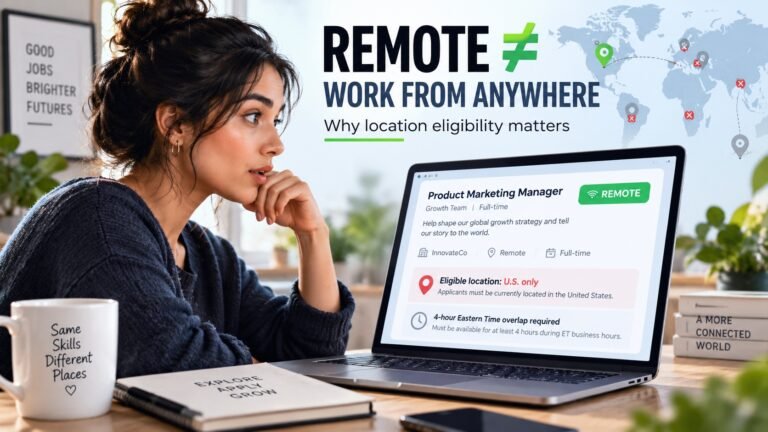
“Remote” does not automatically mean you may work from any country. Before travelling, obtain employer or client approval and verify immigration/work authorization, tax residence and payroll exposure, social security, insurance, data/security rules and accommodation. Use official country sources and qualified advisers for your facts. If any legal, employer or health coverage question is unresolved, postpone the move rather than relying on a travel blog.
Six separate permissions
Immigration: a tourist permission may not authorize productive work. Digital-nomad, remote-worker or residence routes have country-specific income, insurance, employer/client and documentation rules.
Employer/client approval: an employer may restrict countries for payroll, tax, regulatory, export-control, data, security or time-zone reasons. Written approval matters even when immigration permits work.
Tax: tax residence is not determined by a single universal day count. Countries define residence and treaties allocate taxing rights differently; payroll or business establishment issues may arise.
Social security and benefits: cross-border work can affect contributions, healthcare, pension and employment protection. Coordination rules depend on countries and status.
Insurance: travel insurance may exclude ongoing work, pre-existing conditions, equipment or long stays. Confirm health, liability, evacuation and property coverage in writing.
Data/security: client contracts or law can restrict data location/access. Use managed devices, MFA, encryption, updates, backups and approved networks; avoid exposing confidential screens in shared spaces.
Go/no-go worksheet
| Domain | Evidence required | Status |
|---|---|---|
| Immigration/work | Official route and eligibility link | Green/amber/red |
| Employer/client | Written country/date approval | |
| Tax/payroll | Adviser or official authority assessment | |
| Social security | Coverage/contribution confirmation | |
| Insurance | Written policy coverage and exclusions | |
| Data/security | Approved controls and country access | |
| Budget | Base, tax, insurance, travel, emergency and exit funds | |
| Continuity | Internet, power, time zone and return plan |
Any red is a stop. Amber requires an owner and deadline before booking non-refundable travel.
Practical preparation sequence
- Choose one country and exact dates; avoid planning from a generic “nomad visa list.”
- Check the destination’s embassy/immigration and tax-authority pages, then record access dates.
- Obtain employer/client approval and confirm allowed systems/data.
- Get qualified tax/social-security advice for home and destination facts.
- Confirm insurance and build an emergency/return budget.
- Test equipment, backup internet, power, time-zone schedule and secure recovery.
- Carry lawful documentation securely and review rules before extension or onward travel.
Your Europe states that EU citizens can generally work in other EU countries without a work permit, subject to residence conditions, and warns that tax, benefits and insurance consequences remain. That is EU-specific and does not answer a non-EU national’s case. Official Portugal materials show how even a named remote-worker route can require contracts, income and tax-residence evidence; thresholds can change and must be rechecked.
Application process and scam safety
When applying for “work from anywhere” jobs, verify the employer’s permitted hiring countries and employment model. Never pay for a job, visa shortcut or employer-of-record activation through an unsolicited recruiter. Use licensed/authorized professionals, verify government domains and treat guaranteed visas or tax-free claims as red flags.
FAQ
Can I work remotely on a tourist visa?
Do not assume so. Check the destination’s official immigration rules and obtain advice for your nationality and activity.
Does staying under 183 days prevent tax residence?
Not universally. Residence, source, treaty and employer/business rules vary.
Do I need employer permission?
Employees generally should obtain written approval because legal, security, payroll and policy restrictions may apply.
Which insurance is essential?
Coverage depends on location and activity; verify health, evacuation, liability, equipment and exclusions in writing.
Internal links and stale cleanup
Add checked links to WorkinVirtual’s remote-country eligibility tool, remote-work security guide, cross-border job checklist and budgeting tool. Remove destination rankings, static visa thresholds, universal tax rules and VPN-as-legal-solution advice. Add prominent “last verified” and country-source dates.
Sources
- Your Europe working abroad: https://europa.eu/youreurope/citizens/work/work-abroad/index_en.htm
- Your Europe tax abroad: https://europa.eu/youreurope/citizens/work/taxes/income-taxes-abroad/index_en.htm
- EU cross-border tax overview: https://taxation-customs.ec.europa.eu/taxation/personal-taxation/eu-taxpayers-and-cross-border-tax-issues_en
- Portugal foreign-law remote-worker briefing: https://migrant-integration.ec.europa.eu/system/files/2022-11/Brochure-Portuguese%20Foreign%20Law_Main%20changes_EN.pdf
- CISA Secure Our World: https://www.cisa.gov/secure-our-world
Choose your next step
Keep your momentum with practical tools and verified remote-work opportunities.
Related guides for your next step
A fresh, topic-aware mix from the WorkinVirtual library. Suggestions rotate regularly.





Discuss this guide
Ask a useful question, share relevant experience, or add a practical correction. Helpful contributions publish immediately after automated safety checks.
Start a thoughtful discussion
Be the first member to add a question or practical insight about this topic.
Join the discussion
Sign in with your verified WorkinVirtual account to contribute. Automated safety checks keep posting quick and protect the community.
Sign in to contribute