

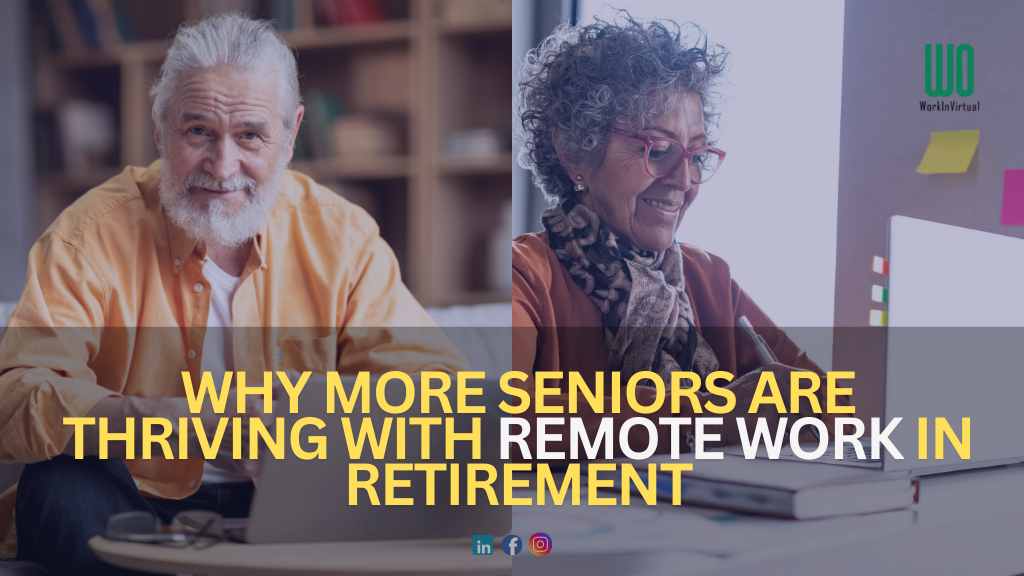
Remote work can offer location and schedule flexibility, but it is not automatically easier, accessible or suitable for every older worker. Start with the work itself: duties, schedule, technology, physical setup, employment status, pay, benefits and location rules. Match transferable evidence to a current official role and request accessibility support through the proper route when needed. In the United States, working can affect Social Security benefits before full retirement age; use SSA’s current rules or qualified advice. Age should not be used as a proxy for ability.
Evidence that demonstrates fit or progress
Create a skills inventory from the last ten years: problems solved, tools, domain knowledge, customer or stakeholder work, quality, risk and outcomes. Translate three examples into current language without hiding dates or exaggerating software fluency. Test the actual remote workflow: video, authentication, documents, communication, ergonomic setup and support. Record training gaps and an accessible learning plan. Do not disclose health, age or benefit details in a public portfolio; include only information required at the legitimate stage.
Build a requirement-to-evidence matrix with requirement, proof, result and gap columns. Copy a current requirement or operating need into the first column. Add one truthful example and a verifiable result. Label missing proof as a gap instead of hiding it with keywords. Legal status, health, safety, schedule, location, privacy, accessibility or security mismatches require a decision.
Write two short cases containing context, constraint, personal action, quality or safety check and result. Reduce each to one résumé, plan or portfolio bullet. Keep confidential clients, systems, employees, health information and security details out. A credible sanitized example is stronger than detail that should not be public.
How to apply or use the guidance
Choose roles from duties and constraints, then search official employer portals. Record status, location eligibility, schedule, employee/contractor classification, pay, equipment, travel and accessibility contact. Check SSA rules for your age and benefit type; state tax, pension, Medicare and other consequences may require qualified advice. Ask for a clear interview and onboarding path. Verify recruiters independently and never pay for training, equipment or a job. Use accommodation procedures where applicable rather than assuming an employer cannot adapt a process.
Verification checklist
- Open the official employer, government or primary source.
- Confirm current status, document or requisition ID and the date checked.
- Record legal, location, eligibility, deadline, privacy and work-model constraints.
- Compare mandatory criteria with evidence that can be substantiated.
- Identify one decisive gap before spending more time or money.
- Save the source, decision, accountable owner and fallback.
- Stop when payment, secrets, unsafe access or unofficial transfer of sensitive information is demanded.
Practical exercise and decision aid
Create a next-48-hours card with one verification, one evidence improvement and one communication action. At the end, mark completed, learned and changed. This creates a return reason and keeps the page useful when a legacy vacancy, product claim or simplistic promise is removed.
Use a stop/continue table. Continue when the official source is current, core requirements fit and the next cost is reasonable. Pause when legal status, health, location, accessibility, safety, security, privacy or money is unclear. Stop when an accountable party is hidden, payment is demanded for a job, or normal verification is bypassed.
Safety and stale-content cleanup
Remove claims that seniors universally “thrive,” need simple work or are less technical. Do not promise that earnings will not affect benefits. SSA thresholds and individual circumstances change. U.S. ADEA coverage has scope limits and does not replace local law or legal advice. Remote job scams frequently target people with vague high pay and upfront costs. Avoid publishing birth dates, benefit numbers, medical information or identity documents.
- Replace urgency and guaranteed outcomes with dated verification.
- Do not infer remote work from a digital role or site brand.
- Keep employer, government, manager, worker and tool roles distinct.
- Put official or primary sources ahead of copied pages.
- Do not collect identity, bank, health, immigration or security data.
- Recheck canonical, robots, schema, outbound links and dates in QA.
- Keep unpublished if the intent cannot be served honestly.
Frequently asked questions
Will remote earnings affect Social Security?
They may before full retirement age; check current SSA rules for your situation.
Should I hide my age?
Focus materials on relevant evidence; age discrimination protections and disclosure choices depend on context and law.
Are remote roles automatically accessible?
No. Test the workflow and use the employer’s accommodation route when needed.
What is the biggest scam warning?
Requests to pay, deposit a check, buy equipment or move to unofficial messaging.
Official and primary sources
- EEOC Facts About Age Discrimination — official or primary evidence for scope, status, safeguards or application.
- SSA Plan for Retirement — official or primary evidence for scope, status, safeguards or application.
- SSA 2026 COLA and Earnings-Test Facts — official or primary evidence for scope, status, safeguards or application.
- NIOSH Work Flexibility Evidence — official or primary evidence for scope, status, safeguards or application.
- W3C Web Accessibility Initiative — official or primary evidence for scope, status, safeguards or application.
Research checked 2026-08-09. Organization and guidance pages establish context; only an accountable live source establishes a current vacancy, rule, price or individual recommendation. Evidence is applied within its limits and does not guarantee outcomes.
Choose your next step
Keep your momentum with practical tools and verified remote-work opportunities.
Related guides for your next step
A fresh, topic-aware mix from the WorkinVirtual library. Suggestions rotate regularly.





Discuss this guide
Ask a useful question, share relevant experience, or add a practical correction. Helpful contributions publish immediately after automated safety checks.
Start a thoughtful discussion
Be the first member to add a question or practical insight about this topic.
Join the discussion
Sign in with your verified WorkinVirtual account to contribute. Automated safety checks keep posting quick and protect the community.
Sign in to contribute