

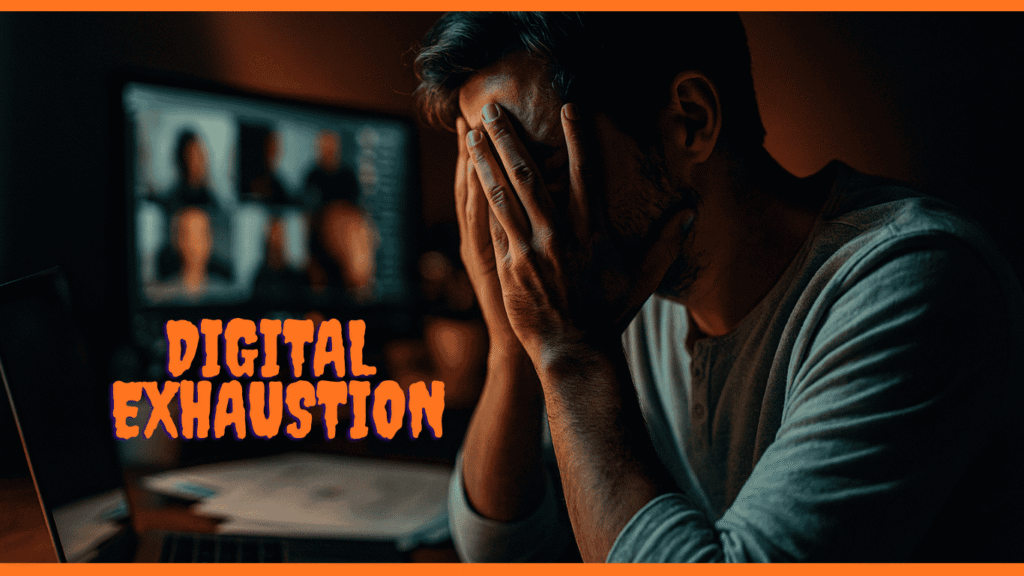
Ever finish a full day of video calls and digital tasks only to feel completely drained, even though you barely left your chair? You are not alone! You are likely experiencing digital exhaustion, a specific kind of burnout wired into the modern remote work life.
For US remote workers, the home office has erased the physical boundaries that once contained work. The constant pings, screen glare, and the pressure to be perpetually “on” create a unique fatigue that traditional coffee breaks can’t fix. Our brains are struggling to keep up with a world of endless digital switches.
However, the good news is you can fight back. This guide moves beyond generic advice to offer proven, nuanced strategies that tackle digital exhaustion at its root. It is time to reclaim your energy and focus.
Why Screens Drain Us Dry
Digital exhaustion is a state of mental and physical depletion caused by the non-stop demands of our digital tools. Professor Paul Leonardi, who studies this phenomenon, explains that our brains are not built for the pace of modern work. Every time we switch from a spreadsheet to a messaging app to a video call, we pay a cognitive tax.
He breaks down the three exhausting switches remote workers face daily. First is switching between tools, like jumping from Zoom to Microsoft Teams. They seem similar, but figuring out how to share your screen on a new platform wastes precious mental energy. The second is switching between tasks, like pivoting from a deep-focus project to answering an urgent chat. This unplugging and re-plugging is a tremendous effort. The most draining is switching between life domains. A text from your child’s school or a call from a doctor in the middle of your workday pulls you entirely out of one world and into another.
The data shows how widespread this fatigue is, as research indicates that digital fatigue affects nearly half of all workers. Another survey found that around 72% of hybrid workers report exhaustion due to constant disruptions to their routine. Furthermore, over half of remote workers feel it is harder to perform their jobs at the same level remotely as in an office.
How can I tell if I am digitally exhausted, not just busy?
The signs are often subtle but persistent. Look for decreased engagement, like keeping your camera off more often or avoiding optional meetings. You might notice shorter attention spans, increased irritability, or a sense of loneliness, even though you are constantly connected. Physically, it can manifest as frequent headaches, eye strain, and neck or back pain from hours of poor posture at a makeshift desk. If you feel like you are running on empty even after checking off your to-do list, you are likely experiencing digital exhaustion.
Actionable Strategies to Reclaim Your Day
Combating this fatigue requires intentional action. Here is how to redesign your workday for sustainability.
Master Your Digital Environment by auditing your tech stack. The average worker toggles between over a dozen apps daily, and this context-switching can crater productivity. Ask your company to consolidate tools or use integrations to streamline workflows. On your end, turn off non-essential notifications. Use “Focus” modes on your devices to create blocks of uninterrupted time, and a simple but powerful tactic is to turn off your self-view video in meetings. As Professor Leonardi notes, constantly watching yourself is like having a mirror in front of your face during a conversation, and it is exhausting or unnatural.
Redesign Your Work Rhythm. Your calendar is your most potent weapon, so implement time blocking to batch similar tasks and protect time for deep work. Embrace the Pomodoro Technique: work in focused 25-minute sprints, followed by a 5-minute break to stretch, hydrate, or look away from your screen. Critically, schedule your breaks, because these pauses are not a luxury, but essential for maintaining cognitive function throughout the day.
Create Physical and Mental Boundaries—your workspace matters. If possible, dedicate a specific area solely for work to help your brain associate that space with focus, allowing you to mentally “leave” the office at the end of the day. At the same time, you must take breaks from that space. Do not eat lunch at your desk; instead, step outside for even five minutes. The goal is to break the feeling that work is everywhere. Furthermore, one of the most effective ways for remote workers to ease fatigue is to negotiate for camera-optional meetings or to make some meetings audio-only, which reduces the intense cognitive load of being on video.
How can companies help reduce digital exhaustion for remote teams?
Leadership plays a crucial role in helping companies combat tech fatigue by auditing their technology stacks to eliminate redundant tools that overwhelm employees. They can establish “no-meeting” days or set core collaboration hours to protect everyone’s focus time. Perhaps most importantly, they must build a culture that respects boundaries by discouraging after-hours communication and modeling healthy digital habits from the top down. Providing training on effective virtual communication can also reduce misunderstandings and unnecessary meetings, thereby reducing fatigue.
Beyond Home Office Walls: The Role of Coworking and Community
Sometimes the best way to overcome the isolation of remote work is to change your scenery intentionally. This is where coworking spaces and intentional community building come in.
The Coworking Antidote. For many, the home is filled with distractions and blurred lines. Coworking spaces in cities and small towns offer a structured, professional environment free from domestic interruptions. They provide reliable, high-speed internet and ergonomic furniture, solving the technical and physical setup issues that can drain energy at home. The simple act of a “commute” to a dedicated space can create a vital psychological separation between work and personal life, making it easier to disconnect at night fully.
Fighting Isolation with Intention. Loneliness is a significant challenge, with 42% of remote workers citing it as a key struggle. Companies can foster connection by creating intentional in-person experiences, like quarterly team gatherings, “lunch and learn” sessions, or mentorship programs that pair employees for coffee chats. For individual remote workers, it is vital to seek connection proactively. This could mean scheduling virtual coffee breaks with colleagues to chat or joining a local professional group. As one expert notes, we are physical creatures who thrive on authentic interaction, something that simulations cannot entirely replace.
Building a Sustainable Remote Work Life
Defeating digital exhaustion is not about working harder, but working smarter and with greater self-awareness. The goal is to move from merely surviving the digital workday to thriving within it.
Start small, and pick one strategy from this guide to implement this week, whether it is turning off your self-view on camera, scheduling your first Pomodoro block, or researching a local coworking space for a change of pace. The cumulative effect of these small changes can be transformative.
The future of work is flexible, but its sustainability depends on our ability to manage its human cost. By understanding the sources of digital exhaustion and actively designing our habits, tools, and environments, we can protect our well-being and rediscover the joy and focus that made us love remote work in the first place. Your energy is your most valuable professional asset, and it is time to defend it.
