

Remote work gave us flexibility, but also blurred boundaries. When the office is in your home, life’s demands and work’s urgencies collide hard. This post offers sharp, research-backed ideas, real stories, and practical tools to help you craft harmony, not chaos.
When Work Invades Family Life Without a Caution Sign
Remote work isn’t always a gift. According to Gallup, 45% of fully remote employees report higher levels of loneliness, compared to 38% of on-site peers, while Esevel says female remote workers face 24% more burnout than men.
For instance, Ayla, who is a marketing lead in Los Angeles, found her toddler barging into every Zoom call. Her workaround? A pre-work 15-minute “mom-and-me” playtime. Result: interruptions dropped by half. Balance isn’t about building walls but more about inviting family in, especially in manageable doses.
Break Smart: Why Small Pauses Protect Big Focus
Remote life often means fewer organic breaks.
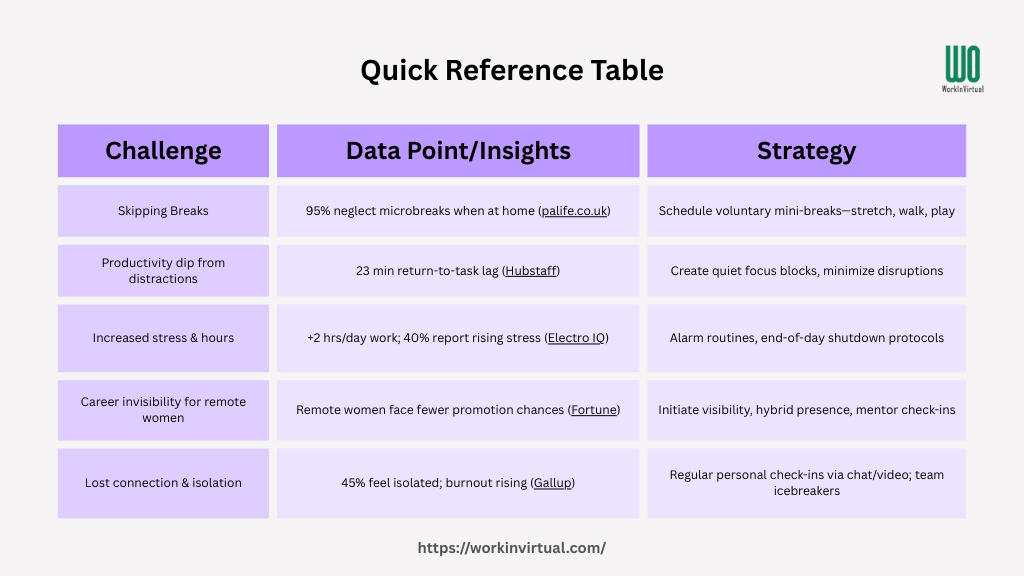
- In the UK, 95% of employees working from home were skipping microbreaks like stretching, chats, or refreshment pauses, even though these improve productivity and morale.
- Studies in PLOS One show microbreaks under 10 minutes boost energy, reduce fatigue, and break burnout’s grip.
- One of the studies says that short microbreaks (up to 120 seconds) can improve productivity by up to 22%, while taking a planned break every 90 minutes can even help better.
Try This: Built-in brief, voluntary mini-breaks, like a water refill, stretch, or moment of silliness with a kid. They’re not distractions, they’re fuel for your soul.
Interruptions Cost Time and Sanity—Here’s the Math
Knowledge workers lose massive time to distractions. According to research, on average, an interruption of work causes a 23-minute refocus lag. One study found office workers endure about 884 interruptions annually versus just 723 for remote workers. That’s nearly 62 hours saved per person each year. In monetary terms, that saves roughly $1,200 annually per worker in the U.S.
What to Do: Schedule “focus blocks” with soft barriers, such as a door sign, headphones, or an agreed quiet activity in the background to reclaim your time.
Carving Boundaries Through Shared Signals
Boundaries don’t need friction, but they just need clarity:
- Families in a global study synced Google Calendars, swapped task zones, or used door notes. One father even said, “I’ll handle lunch today; you’re in calls.” This way, peace reigned.
- One mother told her kids, “When my door is closed, I’m working. I’ll play as soon as I’m done.” Simple, effective, human.
Takeaway: Share calendars, write visible notes, and explain routines in family language, not corporate speak.
Stretching Time Doesn’t Mean Shrinking Yourself
Remote work can sneakily ruin wellness:
- In a recent study conducted by Electro IQ, 28% of remote workers report working an extra 2 hours daily, increasing burnout risk.
- Stress is rising—40% of remote workers globally say it’s worse than ever.
- 45% feel isolated, and many struggle to disconnect after work.
Simple moves that help:
- Use alarms not just for calls but for downtime, such as ‘coffee, play, and sleep prep.’
- Physical movement like even for 2 minutes, eases physical and mental strain.
- Then close your “office.” Work isn’t earned by presence, but it’s measured by results.
When Remote Work Blurs Career Visibility (Especially for Women)
There’s a hidden toll:
- Remote women risk slower promotions, fewer development chances, and lower visibility.
- In 2024, according to research by Fortune, 29% of employed men worked from home, versus 36% of women, reflecting that family demands keep more women remote, but possibly sidelined professionally.
What to Try:
- Schedule face time with mentors.
- Share wins proactively, such as case studies, email summaries.
- Push for hybrid exposure where feasible.
Play, Laugh, and Reset: Humor Isn’t a Luxury
Life will insert itself into your work. Kids, pets, or your internet dying mid-call, this is human territory. A laugh diffuses tension. Studies even show that leaders who maintain humor during stress are seen as more capable.
Real talk: A blender volleying through your presentation? Let it remind everyone that perfection is overrated. What matters more is connection.
Balancing work and family remotely doesn’t demand a flawless schedule, but it calls for realism, rhythm, and tenderness. Block interruptions. Share signals. Laugh when the unexpected strikes. As remote life weaves into our homes, the real win is when both work and family feel heard because you still have a few breaths left for yourself.