

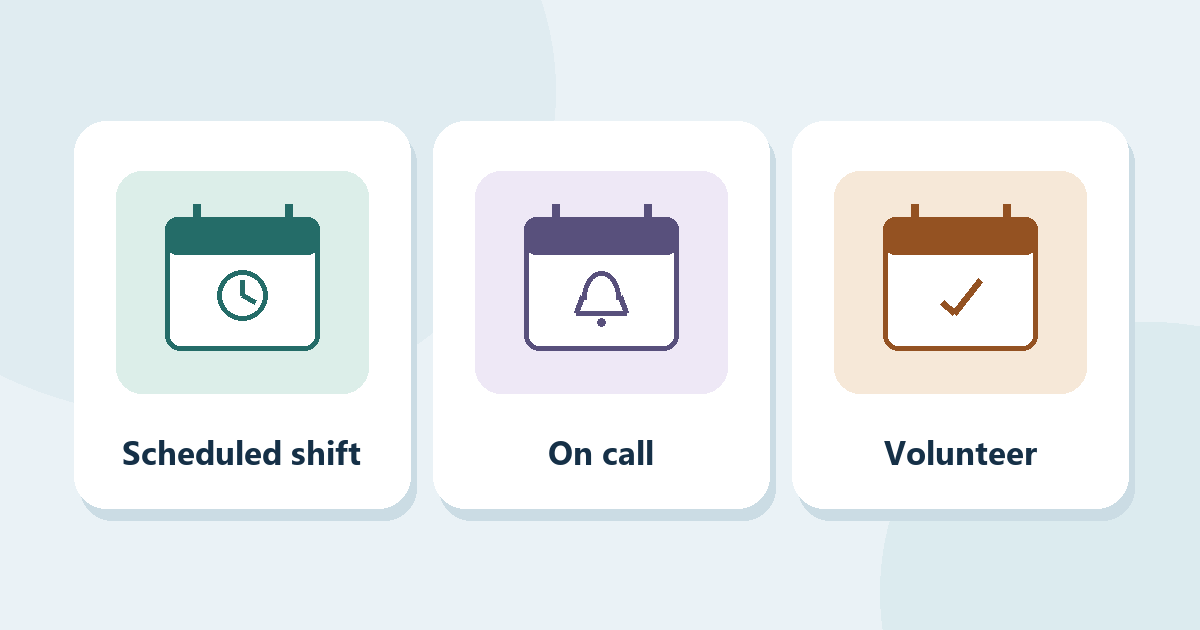
If a U.S. remote job mentions holiday coverage, ask for the dates, local hours, and type of duty before you accept. You might be assigned a staffed shift, asked to take a turn on standby, or invited to volunteer. Confirm how the team fills gaps before treating any holiday as free.
Read the hours and the holiday note separately
A weekday schedule can be accurate for an ordinary week and still leave holiday duties to a separate policy. In its Senior Technical Support Representative posting, Healthie listed a Monday–Friday, 10 a.m.–6 p.m. Pacific schedule, required a few holiday shifts through the year, and said employees could take equivalent time off on another day. The posting did not give the dates of an individual worker’s shifts.
In a Staff Technical Account Manager posting from Twilio, normal customer support hours were 9 a.m.–6 p.m. Eastern, and the posting said the team might seek volunteers for holiday coverage on a stipend basis. That wording leaves a question worth asking: who covers if too few people volunteer? These examples show how employers describe the duty. Check the live posting and ask which locations and terms apply to your exact role.
Find out what kind of coverage you would have
| If the recruiter says… | Put this in your calendar note | Confirm before accepting |
|---|---|---|
| You will work a holiday shift | The exact date, start, end, and time zone. | Who assigns shifts? When is the schedule final? Is there a shift-swap process? |
| You will be on call | The standby window, expected response time, and who backs you up. | Which alerts require action? Must you stay somewhere you can sign in immediately? |
| We ask for volunteers | The signup deadline and whether you volunteered. | Does volunteering cover the whole need, or can someone still be assigned? |
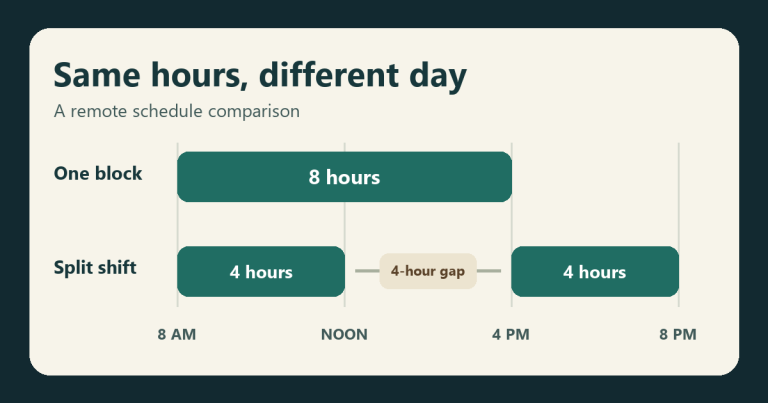
Ask whether the team uses its own holiday list and whether a holiday shift replaces or adds to your usual hours. Request the policy for any stipend or time off and how to schedule it. GitLab’s public engineering handbook gives one example of a team that plans holiday on-call coverage ahead of time and considers trades and split shifts. Your team may handle coverage differently.
Put one holiday on your calendar
Suppose you live in Portland, Oregon and are considering an assigned holiday shift from 9 a.m. to 1 p.m. Eastern. That takes up 6 to 10 a.m. Pacific on the same day. If the recruiter instead says you are on call during that window, keep the time reserved until you know the response deadline and what equipment access the team expects. If the team calls it voluntary, ask how it fills any uncovered shift before making plans.
Keep the holiday date, local shift or standby hours, approval status for any swap, and any agreed time off on one line. A possible swap is still pending until the team confirms it.
Ask for the next coverage schedule
Could you share which holidays this role covers, the expected hours and time zone, and whether I’d be assigned, on call, or asked to volunteer? When will I know if I’m scheduled, and how do approved swaps or time off work?
If the employer requires standby, use the on-call rotation checklist to confirm response and backup expectations. If training has its own schedule, compare it with the training-hour calendar check before you accept.
Choose your next step
Keep your momentum with practical tools and verified remote-work opportunities.
Related guides for your next step
A fresh, topic-aware mix from the WorkinVirtual library. Suggestions rotate regularly.



Discuss this guide
Ask a useful question, share relevant experience, or add a practical correction. Helpful contributions publish immediately after automated safety checks.
Start a thoughtful discussion
Be the first member to add a question or practical insight about this topic.
Join the discussion
Sign in with your verified WorkinVirtual account to contribute. Automated safety checks keep posting quick and protect the community.
Sign in to contribute