

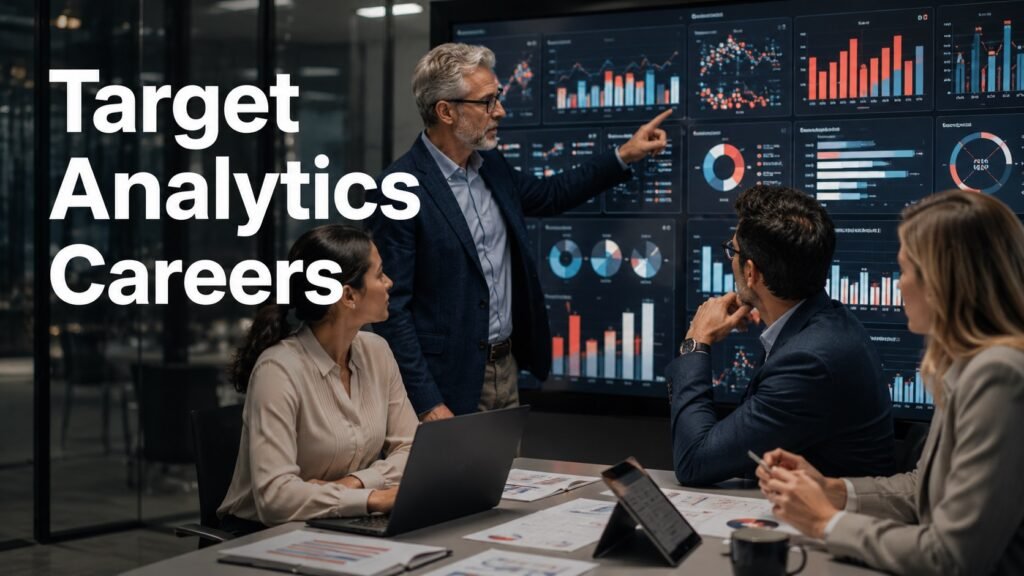
Analytics professionals play an increasingly important role in helping major retailers understand customers, improve products, optimize marketing performance, and make smarter business decisions. Among large U.S. employers, Target has built a reputation for using data, consumer research, and business intelligence to support innovation across retail operations.
This guide explores analytics careers at Target, the types of roles commonly found within research and insights teams, the skills employers seek, and how professionals can prepare for long-term success in the evolving analytics job market.
Quick Highlights
- Target employs analytics, research, consumer insights, and data professionals across multiple business units.
- Many modern analytics roles combine business strategy, consumer behavior, data science, and visualization skills.
- Remote and hybrid work opportunities may vary by department and location.
- Strong SQL, analytics, reporting, and communication skills remain highly valued.
- Demand for research and insights professionals continues to grow across retail and ecommerce.
Why Analytics Careers Matter in Modern Retail
Retail organizations generate enormous amounts of customer, product, marketing, and operational data every day. Analytics teams help transform that information into practical decisions that improve customer experiences and business performance.
Research and insights professionals often support areas such as:
- Customer behavior analysis
- Marketing measurement
- Media effectiveness
- Consumer research
- Pricing strategy
- Product performance
- Business intelligence reporting
- Forecasting and trend analysis
As retail becomes increasingly digital, companies continue investing heavily in analytics talent capable of turning complex information into actionable business recommendations.
Common Analytics Roles at Large Retail Organizations
Consumer Insights Manager
Focuses on customer behavior, market trends, and shopper preferences to support strategic decisions.
Research & Analytics Manager
Leads research initiatives, performance measurement programs, and business intelligence projects.
Marketing Analytics Specialist
Measures campaign effectiveness, customer acquisition performance, and advertising ROI.
Business Intelligence Analyst
Builds dashboards, reports, and data models that help leaders make informed decisions.
Data Analytics Lead
Combines technical expertise with business strategy to guide analytics initiatives.
Skills That Help Analytics Professionals Stand Out
Employers increasingly seek analytics professionals who combine technical expertise with strong business communication skills.
- SQL and database querying
- Excel and spreadsheet modeling
- Tableau, Power BI, or Looker
- Python or R for analytics
- Data visualization
- Consumer behavior analysis
- Research methodology
- A/B testing and experimentation
- Presentation and stakeholder communication
- Strategic business thinking
Remote and Hybrid Analytics Opportunities
Many analytics teams now operate within flexible work environments. Depending on organizational requirements, analytics professionals may work remotely, in hybrid arrangements, or from corporate offices.
Because much of the work involves data analysis, reporting, dashboard development, and virtual collaboration, analytics remains one of the strongest career paths for professionals seeking flexible work opportunities.
Job seekers looking for remote jobs in the U.S. often find analytics, business intelligence, and consumer research roles among the fastest-growing categories.
How to Build a Career in Analytics
Professionals entering analytics careers can strengthen their long-term prospects by focusing on both technical and business skills.
- Develop strong SQL fundamentals.
- Learn dashboard and reporting platforms.
- Build practical analytics projects.
- Create a professional portfolio.
- Understand business KPIs and metrics.
- Practice presenting insights clearly.
- Stay current with AI-powered analytics tools.
Industry Trends Driving Analytics Hiring
Organizations continue investing in analytics because customer expectations, ecommerce growth, personalization, and AI-driven decision making require stronger data capabilities.
According to industry research from the U.S. Bureau of Labor Statistics and major consulting firms, demand for data analysts, operations researchers, and business intelligence professionals continues to expand across industries.
Useful references:
Explore More Career Opportunities
Looking for analytics, research, consumer insights, or business intelligence opportunities?
You can also:
Frequently Asked Questions
What types of analytics careers exist in retail companies?
Retail employers hire business analysts, consumer insights specialists, marketing analysts, research managers, business intelligence professionals, and data analytics leaders.
Can analytics jobs be remote?
Many analytics and reporting roles support remote or hybrid work arrangements, depending on company policy, security requirements, and team structure.
What skills are most valuable for analytics careers?
SQL, data visualization, dashboard creation, business intelligence, research methods, communication skills, and analytical problem solving are among the most sought-after capabilities.
Do analytics professionals need programming experience?
Not always, but familiarity with Python, R, automation tools, and data modeling can improve career opportunities and advancement potential.
How can I find analytics-related remote jobs?
Job seekers can monitor company career pages, professional networks, and specialized remote job platforms that regularly publish analytics, research, and data-focused opportunities.
Choose your next step
Keep your momentum with practical tools and verified remote-work opportunities.
Related guides for your next step
A fresh, topic-aware mix from the WorkinVirtual library. Suggestions rotate regularly.



Discuss this guide
Ask a useful question, share relevant experience, or add a practical correction. Helpful contributions publish immediately after automated safety checks.
Start a thoughtful discussion
Be the first member to add a question or practical insight about this topic.
Join the discussion
Sign in with your verified WorkinVirtual account to contribute. Automated safety checks keep posting quick and protect the community.
Sign in to contribute