

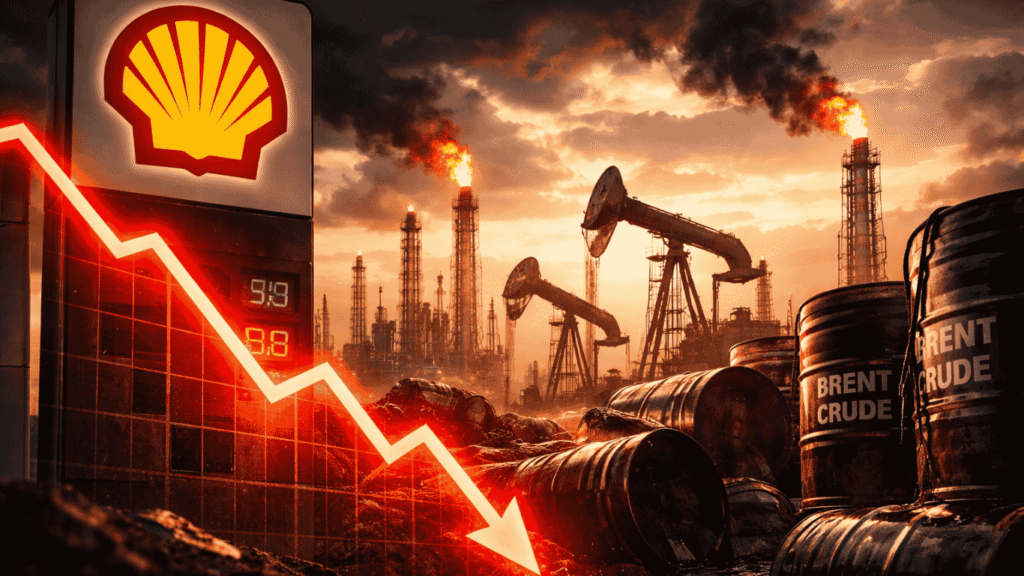
A 22 percent collapse in annual earnings sends shockwaves through the energy sector as Brent crude prices hit five-year lows.
How far can a titan fall before the ground begins to crack? Shell, the crown jewel of the FTSE 100, faced a brutal reality check this morning as it revealed a massive 18.53 billion dollar profit for 2025.
While that figure sounds mountainous, it represents a bruising 22 percent decline from the previous year. The fourth quarter proved particularly agonizing, with earnings cratering by 40 percent compared to the previous three months. Investors watched in dismay as the energy giant posted its weakest quarterly performance since the dark days of early 2021.
The Perfect Storm of Oversupply and Geopolitics
Market forces have created a suffocating environment for the London-based firm over the last twelve months. Global oil prices endured a record-breaking third consecutive year of decline, primarily driven by a world economy with more supply than demand. This surplus, driven by rising production and trade barriers, pushed Brent crude below the $60 mark for the first time in nearly half a decade. Although prices recently clawed back to roughly 68 dollars, the damage to the balance sheet remains visible and deep.
The financial bleed was not limited to crude prices. Shell’s chemical division continues to struggle with thin margins, while unfavorable tax adjustments have added further downward pressure. Despite these headwinds, Chief Executive Wael Sawan maintained a defiant tone. Sawan highlighted the company’s “accelerated momentum” and operational resilience, yet the market remained unimpressed. Shares in the company dipped by more than 2 percent in early trading as the scale of the profit miss became clear to analysts.
A High Stakes Gamble on Shareholder Loyalty
In a bold move to stop the bleeding of investor confidence, Shell announced a 3.5 billion dollar share buyback program. It is the 17th consecutive quarter in which the company has committed at least $3 billion in share repurchases. Furthermore, the board approved a 4 percent dividend increase to sweeten the deal for frustrated stakeholders. Chief Financial Officer Sinead Gorman signaled cautious optimism, suggesting that oil prices might finally stabilize between $65 and $70 per barrel in the coming months.
Eyes on the Horizon and the Venezuelan Frontier
While the books look bruised, Shell is already pivoting toward future opportunities in volatile territories. The company is currently navigating the complex geopolitical landscape in Venezuela, with a focus on the Dragon gas field. Despite intense pressure from the US administration regarding Nicolas Maduro’s leadership, Shell remains committed to its 46.5 percent stake in the facility.
Also Read: Content Marketing for Remote Companies: Creating Valuable Content that Engages and Converts
Gorman confirmed that the group is monitoring the situation closely, seeking trading opportunities while ensuring full compliance with international sanctions. For now, the strategy involves leaner spending, with capital expenditure capped between 20 billion and 22 billion dollars for the year ahead. Whether this conservative approach can weather the ongoing volatility in the energy market remains the multi-billion-dollar question.
